


Bed Sizes in Canada: Twin to King Dimensions Explained
Choosing the right bed size affects more than sleep space. It also affects room layout, sheet and frame costs, and whether the bed can move through your doorway, hallway, or stairs on delivery day. This guide is for Canadian shoppers replacing a mattress, furnishing a first home, or comparing sizes before buying a new bed frame. One common misunderstanding is whether Double and Full are the same size in Canada. At Furniture Spot & Mattress Outlet in Halifax, shoppers often compare bed sizes in person to see how Twin, Queen, and King options fit their room layout.
What are the standard bed sizes in Canada?
Here are the most common standard bed sizes used in Canada, from Twin to King.
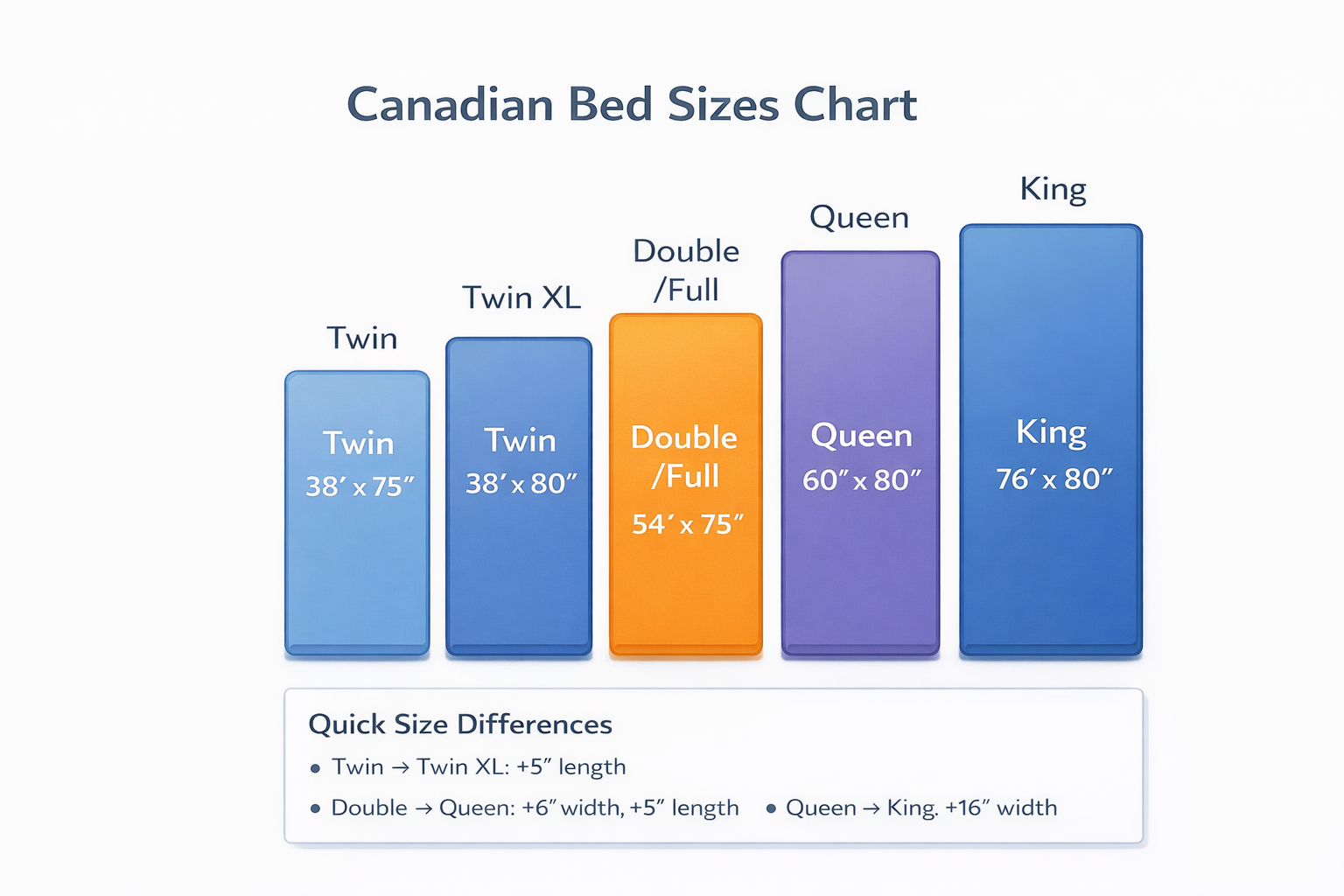
| Bed Size | Dimensions (inches) | Dimensions (cm) | Commonly chosen for |
|---|---|---|---|
| Twin / Single | 38" x 75" | 96.5 x 190.5 cm | One sleeper, kids' rooms, smaller bedrooms |
| Twin XL | 38" x 80" | 96.5 x 203 cm | One taller sleeper, guest rooms, student setups |
| Double / Full | 54" x 75" | 137 x 190.5 cm | One sleeper who wants more width |
| Queen | 60" x 80" | 152.5 x 203 cm | Two sleepers, or one sleeper who wants more surface area |
| King | 76" x 80" | 193 x 203 cm | Two sleepers who want more width |
These are the standard mattress measurements commonly listed in Canada, but brand sizing can vary slightly, so always check the product page before ordering.
How much space does each size actually give you?
The width matters most when you compare personal space. A Twin gives one sleeper 38 inches of width. A Double gives 54 inches total. A Queen gives 60 inches total. A King gives 76 inches total.
If two people share the bed and split the width evenly, the personal space looks like this:
-
Double: 54 ÷ 2 = 27 inches each
-
Queen: 60 ÷ 2 = 30 inches each
-
King: 76 ÷ 2 = 38 inches each
That is why the jump from Double to Queen often feels noticeable, and the jump from Queen to King is mainly about extra width, not extra length. A Queen is 6 inches wider and 5 inches longer than a Double. A King is 16 inches wider than a Queen, with the same 80-inch length. If you share the bed, consider motion transfer and personal space.
How much room do you need around the bed?
A bed can fit on paper but still make the room feel cramped once you add side tables, dressers, or walking space. If your room is small, plan walking clearance on both sides.
A simple example helps:
-
A 10-foot-wide room is 120 inches wide
-
A Queen is 60 inches wide
-
120 - 60 = 60 inches left over
-
If the bed is centered, 60 ÷ 2 = about 30 inches on each side
Now compare that to a King in the same room:
-
A King is 76 inches wide
-
120 - 76 = 44 inches left over
-
44 ÷ 2 = about 22 inches on each side
That means a Queen may leave more usable side clearance in the same room, especially once you add furniture. This is one reason room measurements matter as much as mattress size.
What should you measure before you buy?
Before buying, measure your doorway, hallway turns, and stairs.
Use this checklist:
-
Bedroom width and length
-
The exact inside dimensions of your current bed frame, if you are reusing it
-
Doorway width
-
Hallway corners and turns
-
Stair width and landing space
-
Elevator depth, if you live in an apartment
-
Space needed for side tables, drawers, and closet doors
Many shoppers measure the bedroom but forget the delivery path. That can become a problem with larger mattresses, larger boxed products, or bulkier bed frames. At Furniture Spot & Mattress Outlet in Halifax, our team often helps shoppers measure rooms and compare bed sizes in person before choosing a mattress or frame.
Does the bed frame or foundation change what size you need?
Yes, because mattress size and support type are related, but they are not the same decision.
A Queen mattress still needs a Queen-compatible support system. That support might be:
-
A platform bed
-
A traditional bed frame with a box spring or foundation
-
A slatted frame
-
An adjustable base made for that mattress size
If you use a platform bed, confirm slat spacing and support requirements. If you are replacing only the mattress and keeping an older frame, measure the inside frame width and length first. Older or imported frames can sometimes differ from current standard sizing.
Furniture Spot & Mattress Outlet currently has separate product categories for mattresses, box springs and bases, and bed frames by size, which helps shoppers compare complete setups..
Which size makes the most sense for different households?
There is no single right answer. The better choice depends on the room, the number of sleepers, and whether you are also replacing the frame, sheets, and foundation.
A simple way to think about it:
-
Twin / Single: often used for one sleeper in a smaller room
-
Twin XL: useful when one sleeper needs more length without extra width
-
Double / Full: gives one sleeper more width than a Twin, but can feel narrow for two adults
-
Queen: a common middle ground for couples and primary bedrooms
-
King: mainly chosen for added width when the room can support it
If you are upgrading from Double to Queen or from Queen to King, remember that you may also need new sheets, a new mattress protector, and a matching frame or foundation. The table above shows the standard bed size chart used in Canada, from Twin through King.
FAQ
Is a Double the same as a Full in Canada?
Yes. In standard Canadian and U.S. sizing, Double and Full usually refer to the same size: 54" x 75".
Is Twin XL wider than a regular Twin?
No. A Twin and a Twin XL are both 38 inches wide. Twin XL is 5 inches longer.
Can a Queen fit in a 10 x 10 room?
A Queen can physically fit in a 10 x 10 room, since the mattress is 60" x 80". But whether it feels practical depends on your side tables, dresser placement, closet access, and walking space. Based on the mattress width alone, a centered Queen in a 10-foot-wide room leaves about 30 inches per side before other furniture is added.
Do bed sizes vary slightly by brand?
Yes. Standard sizes are consistent, but small tolerances can happen. Always check the listed product dimensions before buying.
What should I check before delivery?
Measure the room, the frame, and the full access path into the home. The most overlooked points are narrow stairs, hallway turns, and apartment elevators.
Related reading
These related pages are currently live on Furniture Spot and match this topic cluster.
Reality Check
Common mistakes include choosing by mattress width alone, forgetting to measure the delivery path, assuming old sheets or foundations will still fit, and expecting a larger size to change firmness or support on its own.
What can go wrong:
-
The bed fits the room, but the frame blocks drawers or walking space
-
The mattress fits, but the old frame is slightly off-size
-
Delivery access is tighter than expected
-
Return and exchange terms vary by retailer
-
A larger size increases the cost of related items like sheets, protectors, and foundations
This guide is most useful for shoppers comparing standard Canadian bed sizes for regular bedrooms. It is less useful if you are shopping for RV mattresses, antique frames, bunk setups, split sizes, or other non-standard products that need exact product-by-product measurements.
