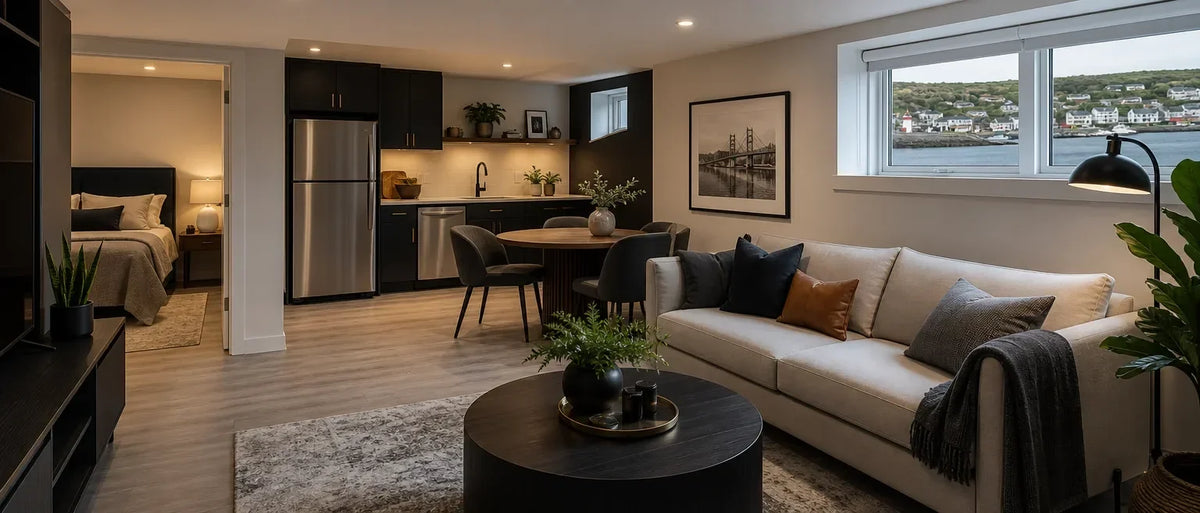
Choosing a Sofa for a Nova Scotia Basement
Choose a basement sofa by measuring the full stair route first, then favouring a size and construction that suit the room’s cooler, potentially damp conditions. Removable legs, backs or modular sections can solve tight access, but only when the manufacturer confirms what comes apart.
Solve the stair problem first
Basement deliveries often fail at the turn, not the exterior door. Measure stair width, landing depth, overhead clearance, railings and the doorway at the bottom.
Compare those numbers with the sofa’s width, depth, height and diagonal. If approved parts remove, record the reduced dimensions rather than assuming the change is enough.
Photograph every turn with a tape measure visible. Measuring Your Stairs Before a Delivery gives the detailed route check.
Standard delivery is entryway only; stairs and room-of-choice service apply only when confirmed. Tell Furniture Spot about the basement before the delivery appointment.
Account for damp and cool air
Basements can be cooler than the rooms above, and some develop high humidity. Upholstery should not sit against a damp wall or directly on a wet floor.
Check the room before buying. Water entry, visible mould or persistent dampness needs attention from a qualified professional; a fabric choice cannot fix a building moisture problem.
Ask for manufacturer care information on the exact cover and frame. Avoid claims that a fabric is “mould-proof” or that a particular sofa prevents moisture problems.
Work with low ceilings and small windows
A low-backed sofa can preserve sight lines and make a low ceiling feel less crowded. Measure the full height of recliners in motion, not only the closed profile.
Use lighter upholstery where it suits the household and add several modest light sources instead of relying on one ceiling fixture. Keep lamps and cords out of traffic routes.
Scale matters more than colour alone. Tape the sofa footprint on the floor and leave enough room for doors, storage, game tables and people moving between zones.
Small basement windows may be required for safety or access under applicable rules; do not block them. Ask a qualified building professional about any code or egress question.
Sectional or sofa plus chairs?
A sectional creates a large shared seating zone but uses more continuous floor space. Each section may be easier to carry downstairs than one long sofa, depending on dimensions.
A sofa plus movable chairs offers flexible paths and lets the room change between movies, games and guests. It can also distribute the purchase over time.
Think about maintenance access as well. Leave space to inspect walls and floors, reach electrical panels or utility equipment, and move the sofa for cleaning without dismantling the whole room.
| Layout | Useful when | Check first |
|---|---|---|
| Modular sectional | Large group seating is the priority | Module sizes, connectors and final footprint |
| Sofa plus two chairs | Routes or activities change | Chair depth and walking space |
| Loveseat plus chairs | The room or stair is very tight | Total seats needed |
| Reclining sofa | Foot support matters | Wall clearance, open depth and power access |
Identify models that actually fit
Take a photograph with the back or legs removed where permitted. Sofas That Fit Tight Entrances: Boxed, Modular, Removable explains these designs in detail.
Do not disassemble an upholstered frame simply because screws are visible. Supplier approval and instructions protect the product and the people carrying it.
Basement sofa checklist
- Check the room for unresolved water or dampness
- Measure every stair, landing, turn and doorway
- Record overhead obstructions
- Tape the finished footprint on the floor
- Confirm approved removable parts by model
- Check reclining or sofa-bed open dimensions
- Read upholstery cleaning instructions
- Keep required windows, equipment and exits clear
- Confirm stairs and room placement on the order
Basement seating also needs a practical cleaning plan. Leave enough room to vacuum behind the sofa and inspect the floor after wet weather. If the piece has removable cushions, confirm how they should be rotated and cleaned. Keep the model number and fabric code with the receipt so future care questions can be answered from the correct supplier instructions.
Think about how the room is used during the week, not only movie night. A sofa that leaves space for a dehumidifier, storage cabinet and clear stair landing will usually be easier to live with than the largest piece that can be forced downstairs. Mark those everyday zones before choosing the final width.
FAQ
What is the best couch for basement stairs?
Choose a model whose largest component fits the measured route. Modular, boxed or approved removable-back designs often help.
Is fabric or leather better for a basement sofa?
Neither material fixes dampness. Resolve building moisture first, then compare the exact manufacturer care requirements and household use.
Will a sectional fit down basement stairs?
It may if every individual module clears the route. Measure the largest section and all turns before ordering.
How should I arrange a low-ceiling basement rec room?
Use appropriately scaled seating, preserve walking paths and keep required windows or equipment clear. Tape the layout before delivery.