Three-Quarter Mattresses: Finding a Fit for an Older Bed
A three-quarter bed is narrower than a standard double and may need a 3/4 or custom mattress rather than a current standard size. Measure the clear space inside the bed rails at several points, record the support system and confirm a supplier before altering an antique frame.
What a 3/4 bed is
The term “three-quarter” commonly describes an older bed around 48 inches wide, but historic frames are not reliably standardized. Length, rail spacing and corner shape can vary even when two owners use the same name.
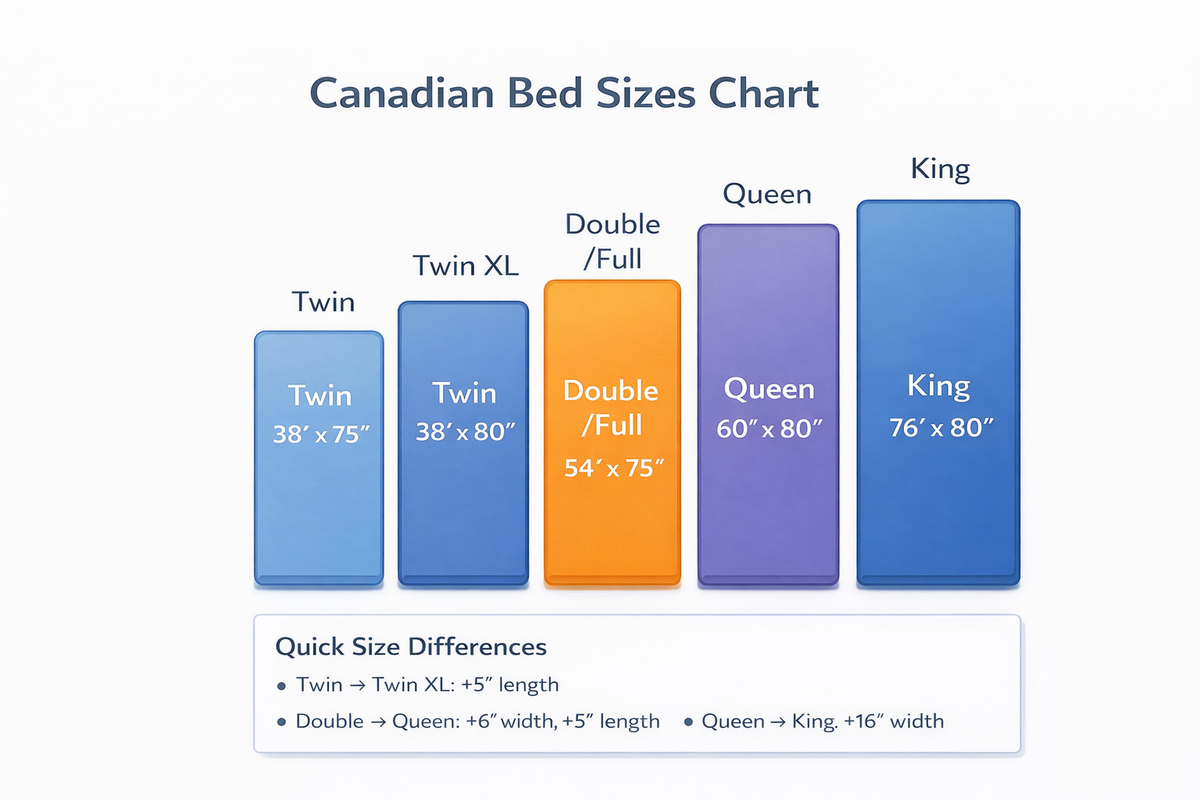
A modern double mattress is generally wider than the nominal 3/4 size, so squeezing one between rails can damage the mattress or leave it unsupported. A twin is narrower and may create unsafe or impractical gaps.
Bed Sizes in Canada and What Size Is a Double Bed cover standard current sizes without treating them as exact matches for an antique.
Why older Nova Scotia beds vary
Farmhouses, heritage homes and inherited bedroom sets often preserve frames made before today’s common mattress sizes settled into place. Some were locally built; others have been repaired, shortened or combined with later rails.
That history is useful context, not proof of an age or origin. Do not label a frame antique or local without documentation.
Look for evidence of modifications: extra bolt holes, replacement slats, blocks added to the rails or a support deck that does not match the headboard. These details can change the usable mattress space.
If the frame has financial or family value, consult a qualified furniture conservator before drilling, cutting or changing original hardware.
Measure inside the rails
Remove bedding and the existing mattress so the support area is visible. Measure the clear inside width at the head, centre and foot because old rails may bow or sit out of square.
Measure the inside length on both sides and through the centre. Record the depth from the top of the rail to the support surface; this helps determine how the mattress will sit visually and whether the rail may cover too much of its edge.
Also document:
- Distance and condition of slats
- Presence of a centre rail and floor-reaching support
- Shape and projection of corner hardware
- Highest obstruction inside the mattress area
- Finished floor to top-of-rail height
- Headboard and footboard clearance
- Narrowest delivery opening to the bedroom
Use a rigid tape and write measurements in both inches and centimetres. Photograph the tape at each edge so a supplier can understand where the dimension was taken.
Your mattress and frame options
A custom mattress may fit an unusual opening more closely. Confirm the maker’s measurement process, tolerances, materials, warranty and whether the order can be changed once production begins.
Converting the frame to a modern size is another option, but it can alter appearance and value. Use a qualified furniture professional, especially where the rails or hardware are original.
Replacing the frame while keeping the headboard as décor may be practical when the original structure cannot provide suitable support. Do not improvise an attachment that weakens the old wood.
Support matters as much as size
The mattress supplier should state the required surface, slat spacing and centre support. An old frame designed for a different foundation may not meet those conditions without professional modification.
Inspect rails, slats, joints and fasteners before adding a new mattress. Furniture Spot can discuss product compatibility but should not certify the structural condition of an antique frame.
If the frame moves, cracks or has missing hardware, stop using it and ask a qualified furniture repair professional. A new mattress will not correct an unstable bed.
Confirm total sleep height as well. A thick mattress or foundation can hide a low headboard or sit awkwardly against a footboard even when the footprint fits.
Sheets and bedding for a 3/4 mattress
Standard twin or double fitted sheets may not hold the corners correctly. Check the mattress’s finished width, length and depth against the bedding package.
Some specialty suppliers offer three-quarter sheets; custom fitted sheets are another route. Availability and dimensions should be verified rather than assumed.
A flat sheet can be more forgiving, but it still needs enough fabric to tuck safely without bunching under the mattress. Mattress protectors must also match the actual depth and footprint.
Keep the supplier’s size label and written dimensions. “Three-quarter” can mean different measurements across sellers, so recheck before ordering replacement bedding.
Measurement worksheet
| Bed detail | Head | Centre | Foot |
|---|---|---|---|
| Clear inside width | |||
| Clear inside length | |||
| Rail-to-support depth |
Add support notes, photographs and the narrowest bedroom access measurement. Give the complete record to the mattress supplier before accepting a custom or non-standard order.
FAQ
What size is a 3/4 mattress?
The name often refers to a bed around 48 inches wide, but dimensions vary. Measure the actual frame and use the chosen supplier’s specifications.
Will a double mattress fit a three-quarter bed?
Usually not correctly because a current double is generally wider. Do not force or compress a mattress between the rails.
Can I get a 3/4 mattress in Canada?
Specialty or custom options may exist, but availability changes. Furniture Spot must confirm its current source before promising one.
Should I convert an antique bed to a standard size?
That depends on condition, value and intended use. Consult a qualified furniture professional before making irreversible changes.