What’s Inside a Mattress at Different Price Points
A higher mattress price can buy different comfort materials, more detailed coil construction and stronger edge systems, but the label alone does not prove what is inside. Compare the layer order, documented specifications and finished feel before deciding what the extra cost provides.
Why construction matters
Mattress shopping is difficult when every useful component is hidden under a finished cover. Words such as “premium,” “supportive” and “high density” are not enough unless the construction can be described and documented.
Construction details help explain why two mattresses with a similar showroom feel can use different support systems. Comfort still needs to be tested in person, and no single construction is right for everyone.
Compare mattresses at different price points
Choose current models from the same size and compare their specifications side by side. Date every price because promotions and inventory change.
Use the same fields for every model: overall height, comfort-layer thickness, coil type, published foam density, edge construction and cover material. Leave an unavailable specification blank instead of guessing.
Read the layers in order
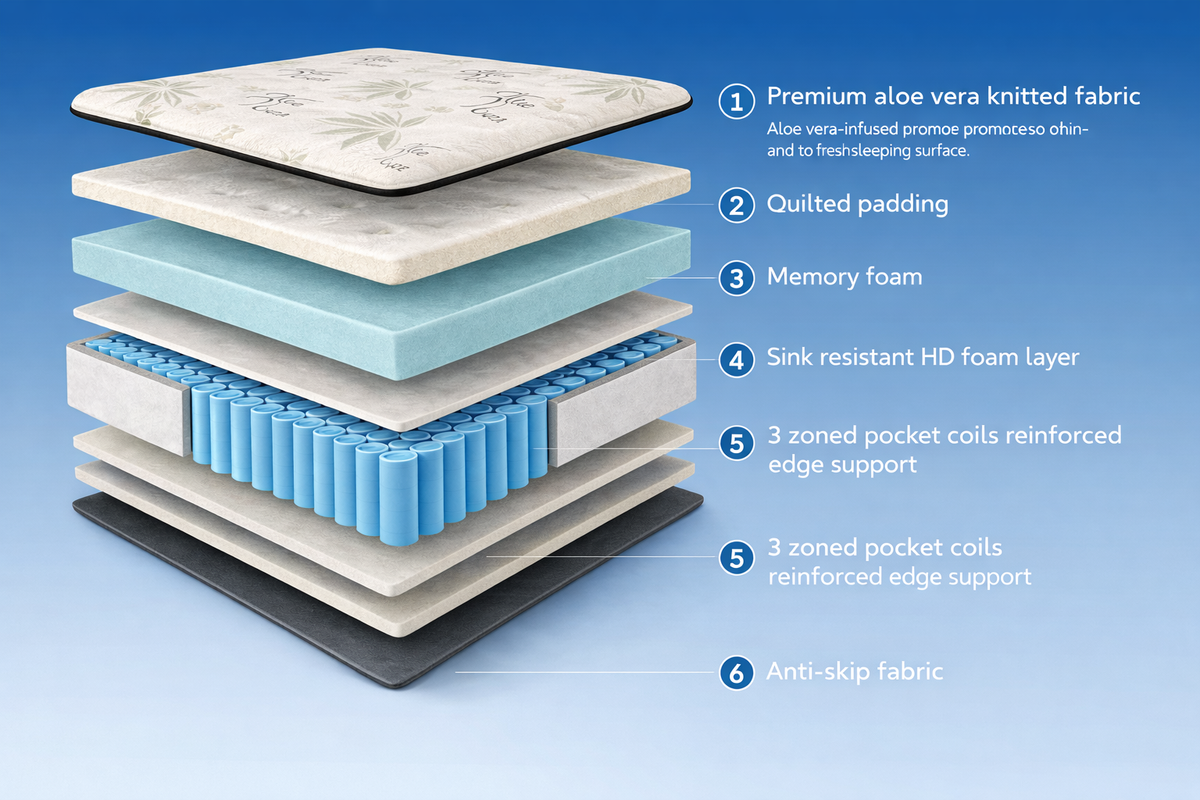
Read the build from the cover down to the support core. A missing or unknown specification should remain unknown rather than being inferred from appearance.
Layer thickness can be measured with a tape or calipers, but foam density cannot be judged by touch. Density is mass per volume, not the same thing as firmness, so we use the supplier specification when available.
What is a coil mattress?
A coil mattress uses a metal spring unit as its main support system. Comfort foams, fibres and the cover sit above it, while the base and edge system keep the structure working as designed.
Traditional interconnected coils move together as a unit. Bonnell coils are a familiar example: their hourglass-shaped springs are joined by helical wires, producing a broad, connected response.
Pocket coils are individually wrapped and can respond more independently. That can reduce how widely movement travels across the surface, although the finished feel also depends on coil count, gauge, layout and every layer above the springs.
Coil gauge describes wire thickness, but a single number does not rank an entire mattress. Coil shape, turns, tempering, zoning and count all affect the design, so compare the full specification instead of chasing one figure.
For construction categories, see Memory Foam vs Hybrid vs Innerspring.
What the extra money buys—and what it does not
In this specific test, the answer must come from the measured table. Possible differences include thicker comfort assemblies, documented foam density, more independent coils, zoning, reinforced edges, upgraded covers or more complex finishing, but none should be claimed until observed.
A higher price does not guarantee that every sleeper will prefer the feel. Someone who likes a direct, firmer surface may choose a simpler construction over a deeper comfort stack.
Price also does not replace a suitable base, correct setup or normal care. The mattress and support system have to meet the manufacturer’s requirements together.
Best Mattress Under $1000 and Can You Get a Good Mattress Under $500 put construction in the context of a real budget. The Mattress Firmness Scale, Explained on Real Beds covers feel rather than hidden components.
How to check construction without a knife
Ask for the supplier specification sheet and use precise questions:
- What are the layers, in order, and how thick is each one?
- Is the foam density published for each foam layer?
- What coil system is used, and is the count stated for this size?
- Is the edge reinforced with foam, firmer coils or another method?
- What support surface and slat spacing are required?
- Which specifications are confirmed by the supplier, and which are not available?
Look at the law tag and model label to confirm you are discussing the same product. Sit near the edge, change positions and lie in your usual posture long enough to notice the response without treating a brief test as a scientific result.
Keep the comparison tied to the exact size and model. Coil count can change with mattress size, and a supplier may revise a cover or comfort layer without changing the general product family. Ask staff to match every specification to the label on the bed you are testing. Save that model information with the receipt so later care or warranty questions refer to the same construction.
FAQ
What’s inside a mattress?
Most contain a cover, comfort and transition layers, a support core made from coils or foam, and an edge or base structure. The exact materials and thicknesses vary by model.
What is a pocket-coil mattress?
Its springs are individually wrapped rather than all joined into one moving unit. The final feel depends on the whole build, not the pocket coils alone.
Does high-density foam mean firm foam?
No. Density and firmness describe different properties; use the documented density and test the finished feel separately.
Is a more expensive mattress always better?
Not for every person. Compare verified construction, suitable support, preferred feel and budget instead of assuming price settles the decision.