Best Sofa for Small Living Room
Choosing the right sofa matters more in a small living room because the wrong one can crowd the space, block walkways, and make the room harder to use every day. This guide is for renters, condo owners, couples, and homeowners trying to find seating that fits a smaller room more realistically. A common misunderstanding is that the smallest sofa is always the best one, but the better choice often depends on depth, arm size, layout, and how the room is used.
What type of sofa usually works best in a small living room?
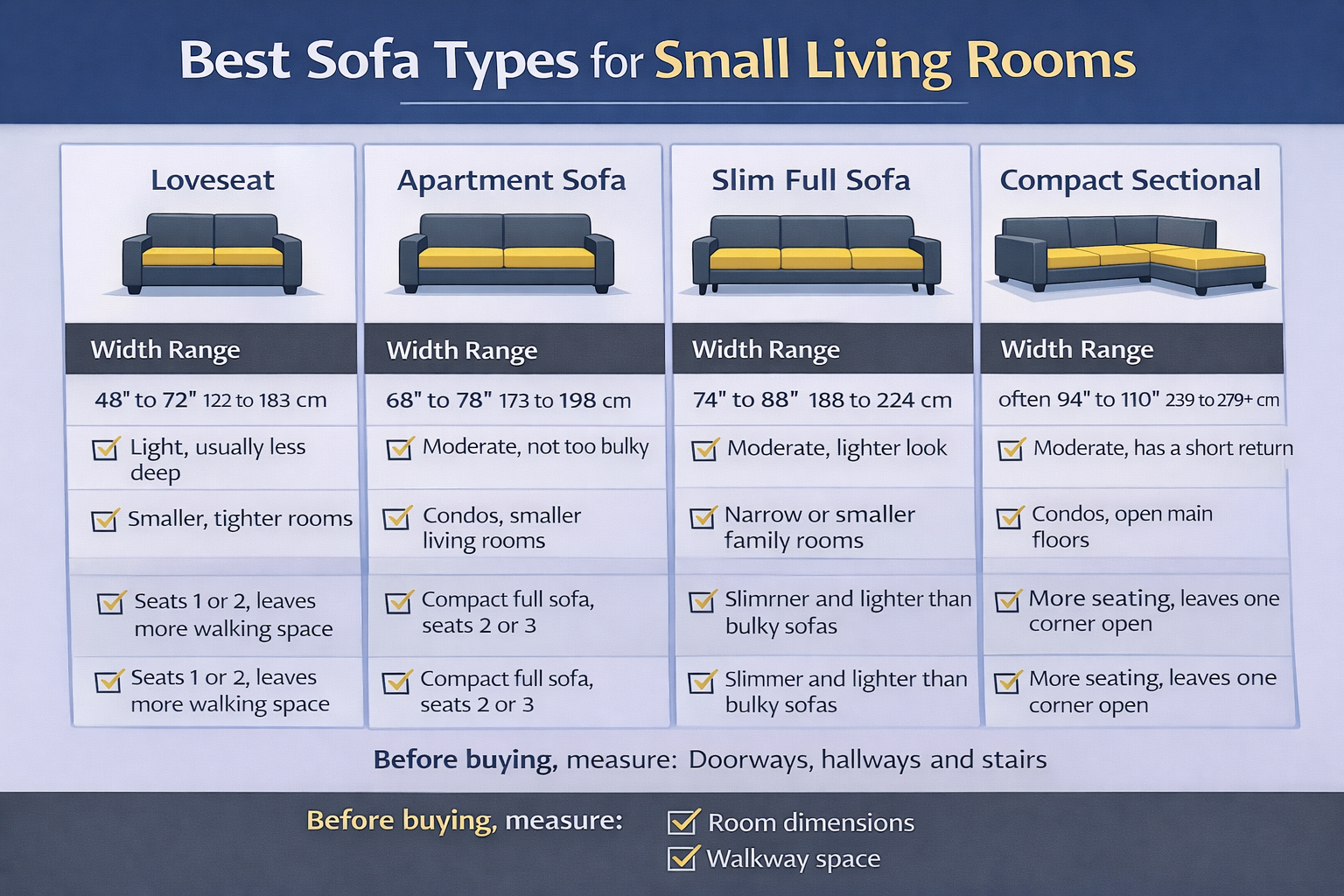
In many small living rooms, the most practical sofas are the ones with a simpler footprint and less visual bulk.
These often include:
- loveseats
- apartment sofas
- slimmer 3-seat sofas
- compact sectionals in the right layout
- sofas with visible legs
A sofa does not need to be tiny to work well. It just needs to leave enough walking space and not overpower the room.
Is a loveseat better than a full sofa?
Sometimes. A loveseat can be a smart choice if the room is very tight or if only one or two people use the space most of the time.
A loveseat may suit:
- smaller condos
- offices or dens
- one-person or two-person seating
- rooms that also need chairs or storage furniture
A full sofa may still be better if:
- the living room is the main seating area
- guests visit often
- you want more stretch-out space
- the room layout can handle the width and depth
Why does sofa depth matter so much in a small room?
Depth often matters as much as width. A sofa can fit the wall and still feel too large if it comes too far into the room.
A deeper sofa may:
- reduce walking space
- crowd the coffee table area
- make the room feel heavier
- limit how other furniture fits nearby
A slimmer-depth sofa can sometimes work better than a shorter but deeper model.
If your room is small, plan walking clearance on both sides.
What sofa styles often work better in small living rooms?
Some sofa styles tend to fit smaller rooms more easily.
Often more practical:
- sofas with slimmer arms
- sofas with raised legs
- apartment-size sofas
- compact straight sofas
- lighter-looking frames
Often harder in tighter rooms:
- oversized deep-seat sofas
- bulky rolled-arm designs
- very thick armrests
- large reclining sofas
- oversized sectionals without enough room depth
The goal is not only to fit the sofa. It is to keep the room usable after the sofa is in place.
Can a sectional work in a small living room?
Yes, sometimes. A compact sectional can work if the room layout supports it and the chaise or return side does not block movement.
A small sectional may suit:
- open-concept spaces
- rooms that do not need extra chairs
- layouts with one clear corner for seating
- buyers who want more seating in one piece
A regular sofa may still be the safer choice if the room is narrow or if you want more freedom to rearrange later.
Should you choose a sofa bed for a small living room?
A sofa bed can make sense in smaller homes, condos, or guest-use spaces, but it adds another layer to consider.
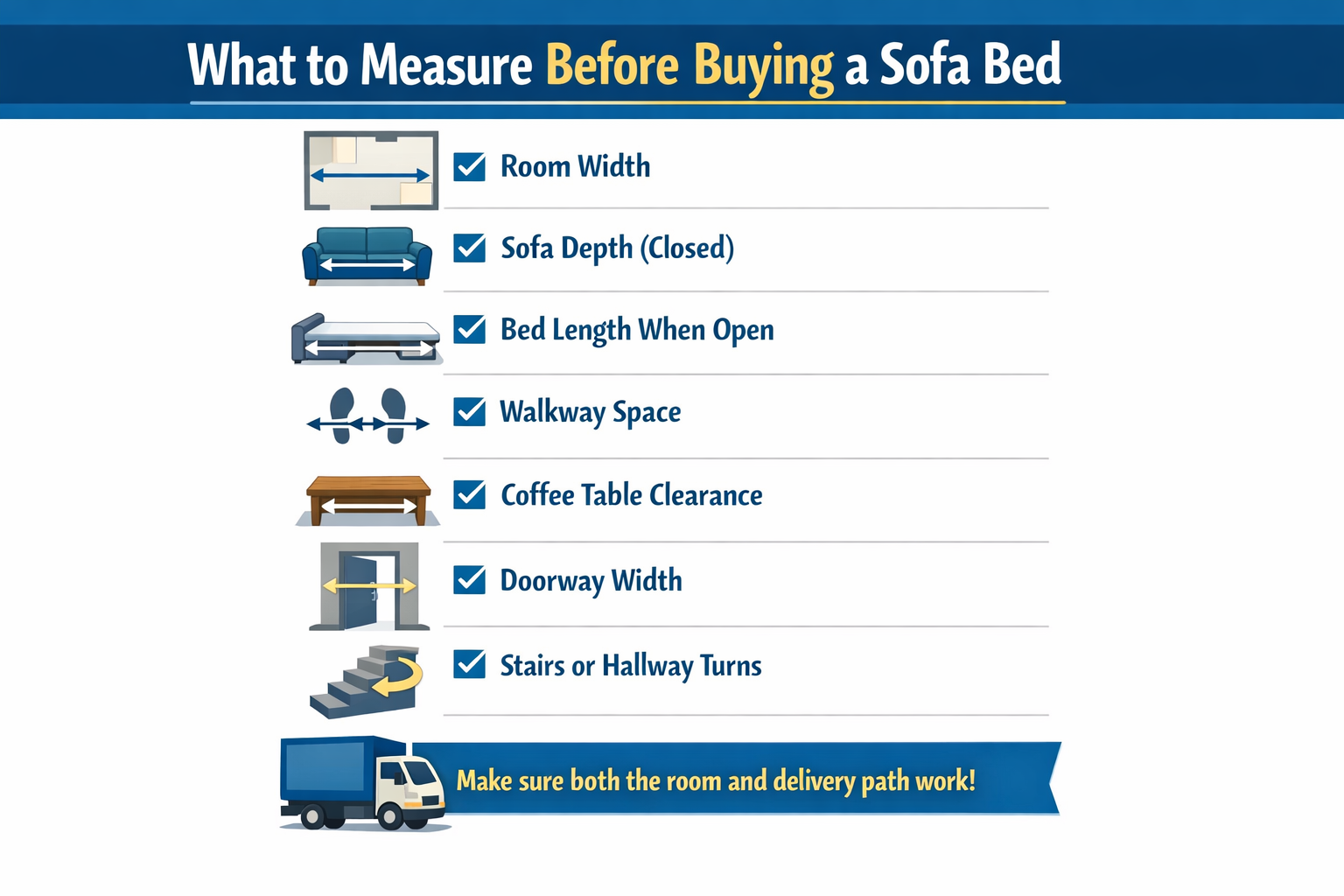
Check:
- overall sofa size
- depth when closed
- sleeping space when opened
- clearance in front of the sofa
- mattress type if relevant
A sofa bed may be helpful in a small living room that also needs to serve as guest space, but it is not always the most compact option.
Before buying, measure your doorway, hallway turns, and stairs.
What should you measure before buying a sofa for a small room?
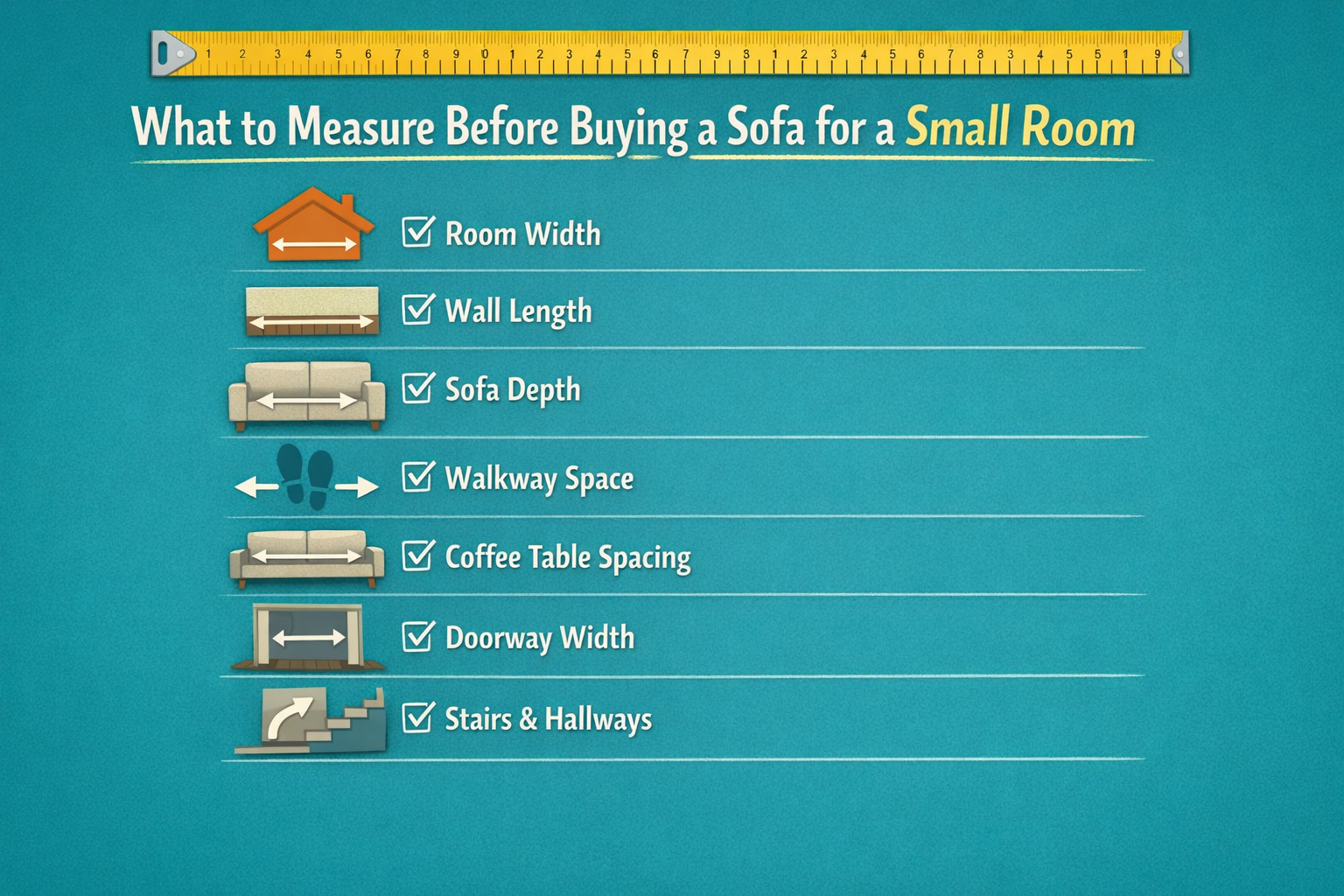
Use this checklist before you buy:
- room width
- room length
- wall length
- sofa width
- sofa depth
- coffee table spacing
- TV distance
- side-table space
- walkway space
- doorway width
- hallway turns
- stairs or elevator access
A sofa that fits the wall can still feel too large if the room needs clear traffic space.
How much open space should you leave around a sofa?
A small living room still needs enough open space to function well.
Think about:
- walking past the sofa
- reaching windows
- opening nearby doors
- using a coffee table comfortably
- not blocking the natural path through the room
A room can feel cramped even if the sofa technically fits.
If your room is small, plan walking clearance on both sides.
Which sofa setup may suit different small living rooms?
For a condo living room
A loveseat, apartment sofa, or compact sofa often works best.
For a narrow room
A straighter sofa with less depth is often easier to place than a sectional.
For a small family room
A slimmer 3-seat sofa may work if the room still has enough walkway space.
For a guest-use living room
A compact sofa bed may help if the room also needs occasional sleeping space.
The better choice is usually the one that balances seating, depth, and movement through the room.
What common mistakes do people make?
Buyers often focus only on width and forget:
- sofa depth
- arm thickness
- nearby door swing
- coffee table clearance
- delivery access
- how the rest of the room will function
A sofa that looks balanced in a showroom or photo can still feel too bulky in a smaller home.
FAQ
What sofa is best for a small living room?
Usually a loveseat, apartment sofa, or slimmer full sofa works well, depending on the room layout and how many people use the space.
Is a loveseat better for a small room?
It can be, especially if the room is very tight or you want to keep more open floor space.
Can a sectional work in a small living room?
Yes, but usually only if it is compact and the room has enough depth for the return side without blocking walkways.
Should I choose a deep sofa for a small room?
Usually a slimmer-depth sofa is easier to place in a small room. Very deep sofas can make the space feel crowded.
What should I measure before buying a sofa?
Measure room width, room length, wall space, sofa depth, coffee table spacing, doorways, hallways, and stairs.
Reality Check
A common mistake is choosing a sofa based only on how many seats it offers. Another is measuring only the wall and ignoring depth, walkway space, and delivery access. Buyers also often underestimate how much bulky arms, deeper seats, or reclining features can affect a small room.
What can go wrong includes blocked walkways, a coffee table area that feels too tight, a sofa that overwhelms the room, or delivery problems through doors and stairs. This option is often best for condo shoppers, renters, and homeowners trying to keep a small living room practical. It may be less suitable for buyers who want very deep seating, oversized sectionals, or large reclining pieces in a tighter space.