Fixed vs Extendable Dining Table: A Decision Guide for Growing Families
Families expecting more members at the table — through kids growing up, extended family visits, or simply hosting more often — face a specific version of the fixed vs extendable dining table decision. Here's how to plan ahead correctly.
Planning for a Household That Will Grow
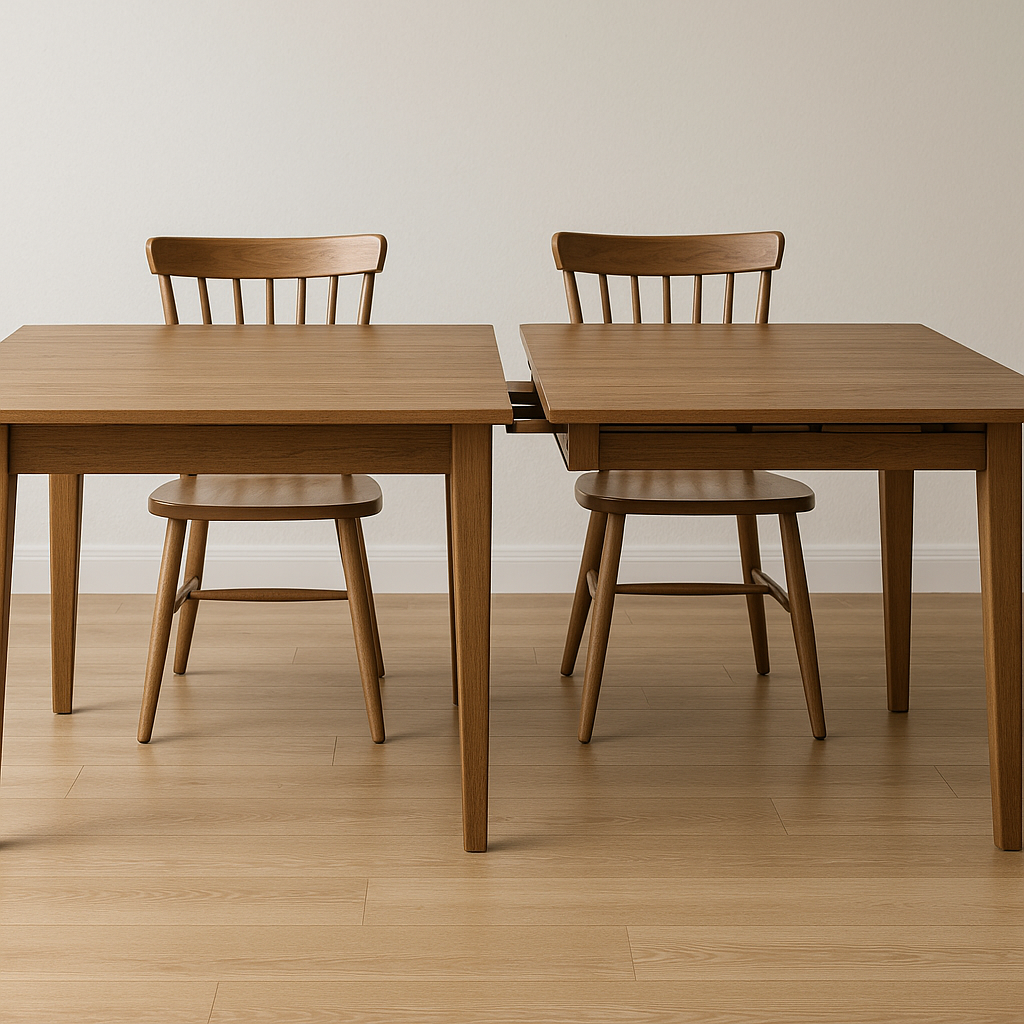
If you know your seating needs will increase over the next few years, an extendable table lets you buy once rather than replacing a fixed table later. The key is choosing a base size that already fits your daily needs, with the extension covering future growth rather than everyday use.
How Much Extra Seating You'll Realistically Need
Estimate your likely future seating needs conservatively — most families end up needing two to four additional seats at most, not a dramatically larger table. Buying an extension that adds more capacity than you'll realistically use adds cost and mechanism wear without a real benefit.
Fixed Tables for Predictable Households
If your household size and hosting habits are unlikely to change — for example, an empty-nest household or a family that has finished growing — a fixed table is simpler, more durable, and typically better value than paying for an extension mechanism you won't use.
Cost of Planning Ahead vs Buying Twice
An extendable table usually costs 15–30% more than a comparable fixed table, but replacing a fixed table entirely when your family outgrows it typically costs significantly more over time. For families expecting genuine growth, the extendable option is usually the better long-term value.
Making the Right Decision for Your Halifax Family
If you're unsure whether you'll need the extra seating, err toward extendable — the cost difference is smaller than the cost of replacing a table you've outgrown. Compare fixed and extendable options in our dining table collection, available for delivery across Halifax and HRM.