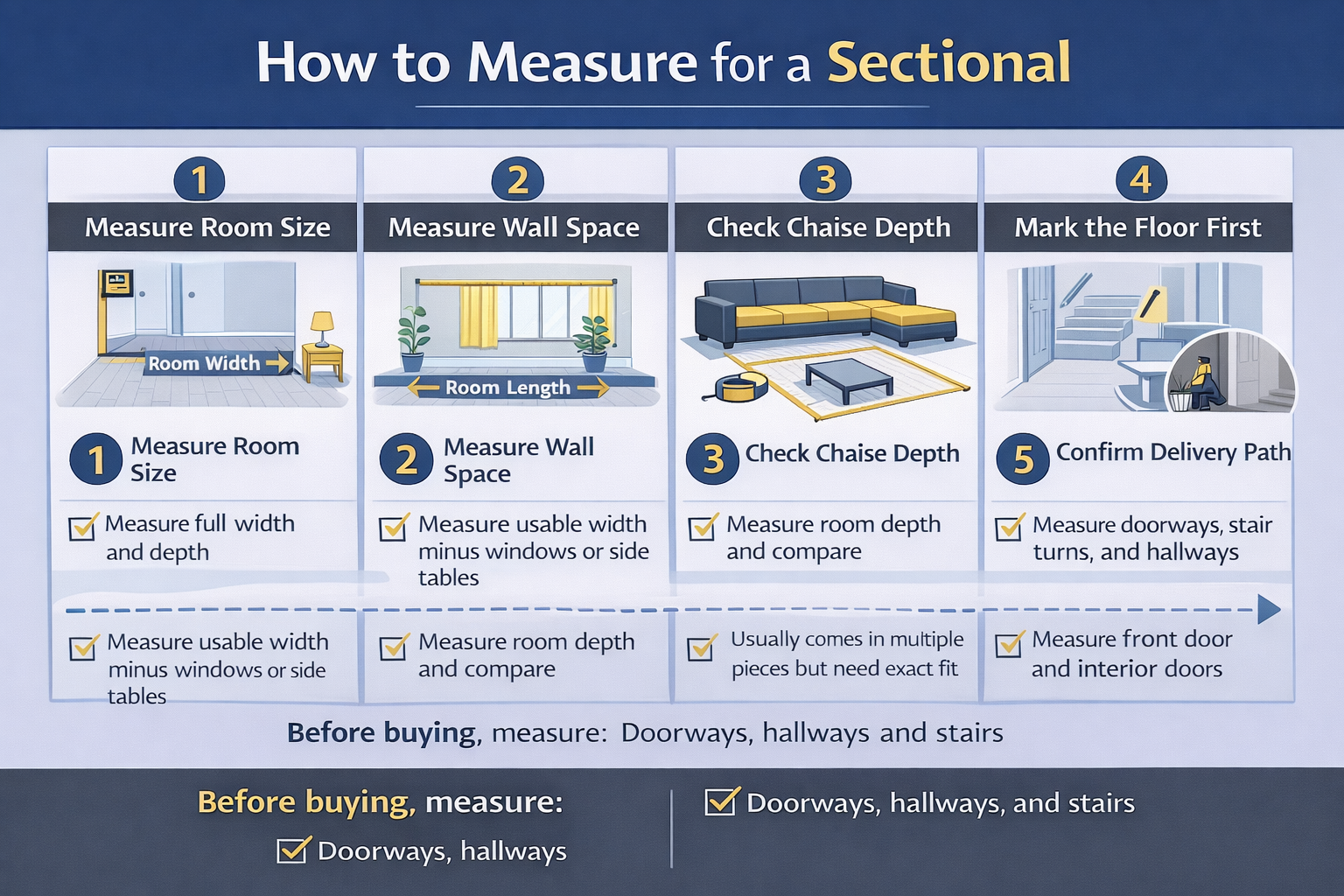
How to Measure for a Sectional
Measuring for a sectional matters because a large seating piece can fit one wall but still feel too big for the room or be difficult to deliver into the home. This guide is for condo shoppers, renters, families, and homeowners trying to avoid layout mistakes before buying a sectional. A common misunderstanding is that measuring only the wall is enough, but a sectional also needs depth, walkway space, and delivery access checked carefully.
What should you measure first for a sectional?
Start with the room itself before looking at sectional dimensions.
Measure:
-
room width
-
room length
-
the wall where the sectional may sit
-
nearby door swing
-
window position
-
vent or baseboard heater location
-
traffic paths through the room
This gives you the usable space, not just the empty wall.
Before buying, measure your doorway, hallway turns, and stairs.
Why is sectional depth just as important as width?
Width tells you how much wall space the sectional uses. Depth tells you how far it comes into the room.
For a sectional, depth often matters just as much because:
-
the chaise or return can block a walkway
-
a deeper seat can take up more floor space than expected
-
a corner section can change how open the room feels
-
coffee table spacing gets tighter in smaller rooms
A sectional can look fine from the front and still feel too large once the return side is in place.
How do you measure the wall for a sectional?
Use a tape measure and note the full width of the wall where the sectional may sit. Then subtract space needed for nearby items or room functions.
Check for:
-
side tables
-
floor lamps
-
windows
-
curtains
-
radiators or vents
-
door trim
-
nearby shelves or media units
Do not assume the whole wall is usable. A sectional often needs breathing room on the sides to avoid looking too tight.
How do you measure for the chaise or return side?
This is one of the most important steps.
Measure from the back wall out into the room to see how much return depth the room can handle. Then compare that with the chaise length or return side measurement of the sectional.
Check whether the chaise or return would:
-
cut into the walkway
-
block another chair
-
crowd a coffee table
-
affect access to a window or balcony door
-
reduce space between the seating area and the TV
If your room is small, plan walking clearance on both sides.
How much walking space should you leave around a sectional?
A sectional should not fill the room edge to edge. You need enough open space to move naturally around it.
Think about:
-
getting into and out of the room
-
walking beside the chaise
-
reaching windows
-
passing between the sectional and a coffee table
-
keeping the room from feeling too full
A sectional that technically fits can still be awkward if traffic flow feels tight.
Should you mark the sectional on the floor first?
Yes. This is one of the easiest ways to understand how the sectional will sit in the room.
Use painter’s tape to outline:
-
the full width
-
the full depth
-
the chaise or return side
-
the space for a coffee table
-
the main walkway
This helps you see whether the sectional fits the room, not just the wall.
At Furniture Spot & Mattress Outlet in Halifax, this is often the step that helps shoppers notice a layout issue before delivery day.
What delivery measurements do people forget?
Many people measure the room and forget the path into the home.
Measure:
-
front door width and height
-
apartment hallway width
-
hallway turns
-
stair width
-
stair landings
-
ceiling height at tight turns
-
elevator width, depth, and door opening if needed
-
interior doorway widths
Before buying, measure your doorway, hallway turns, and stairs.
A sectional may come in multiple pieces, which can help, but access still needs to be checked carefully.
How do you measure for left-hand or right-hand sectionals?
You need to know which side the chaise or return goes on when facing the sectional from the front.
Before choosing orientation, check:
-
which side has more open space
-
where the TV is placed
-
which side keeps the walkway clearer
-
whether a door opens into that zone
-
whether the chaise would block another furniture piece
The wrong orientation can make a sectional feel much bigger than it should in the room.
What furniture spacing should you include?
A sectional does not sit in the room by itself. You also need to plan for the furniture around it.
Measure space for:
-
coffee table clearance
-
side tables
-
floor lamps
-
TV stand or media unit
-
accent chairs
-
rugs
-
walking paths between furniture pieces
A sectional that fits alone may not fit well once the rest of the room is considered.
What checklist should you use before buying a sectional?
Use this checklist before you buy:
-
measure room width and length
-
measure usable wall space
-
measure chaise or return depth
-
tape the footprint on the floor
-
check walkway space
-
check coffee table spacing
-
check TV distance
-
check windows, vents, and doors
-
measure front door and interior doors
-
measure hallways, stairs, and landings
-
confirm left-hand or right-hand orientation
If your room is small, plan walking clearance on both sides.
FAQ
How do I know if a sectional will fit my room?
Measure the full width and depth of the room, then mark the sectional footprint on the floor with tape. Do not measure only the wall.
What should I measure before buying a sectional?
Measure room width, room length, wall space, chaise depth, walkway clearance, coffee table space, doorways, hallways, and stairs.
How much space should I leave around a sectional?
Leave enough space to walk comfortably around the sectional and use the rest of the room without blocking doors, windows, or traffic flow.
Do I need to measure the delivery path too?
Yes. A sectional may fit the room but still be difficult to bring through doors, hallways, stairs, or elevators.
How do I choose left-hand or right-hand orientation?
Choose the side that keeps the room more open and does not block the main walkway, TV view, or nearby door access.
Reality Check
A common mistake is measuring only the back wall and ignoring the chaise or return side. Another is forgetting coffee table spacing, walkway clearance, and delivery access. Some buyers also choose the wrong left-hand or right-hand orientation and only notice the problem after the room is set up.
What can go wrong includes blocked walkways, a sectional that feels too deep for the room, delivery problems through stairs or doors, or a layout that looks fine online but feels crowded in real life. This type of guide is best for shoppers still planning their room layout or comparing sectional options. It may be less useful for buyers who already have a full floor plan and exact model dimensions confirmed.