Is an Orthopedic Mattress Good for Back Pain? What to Know
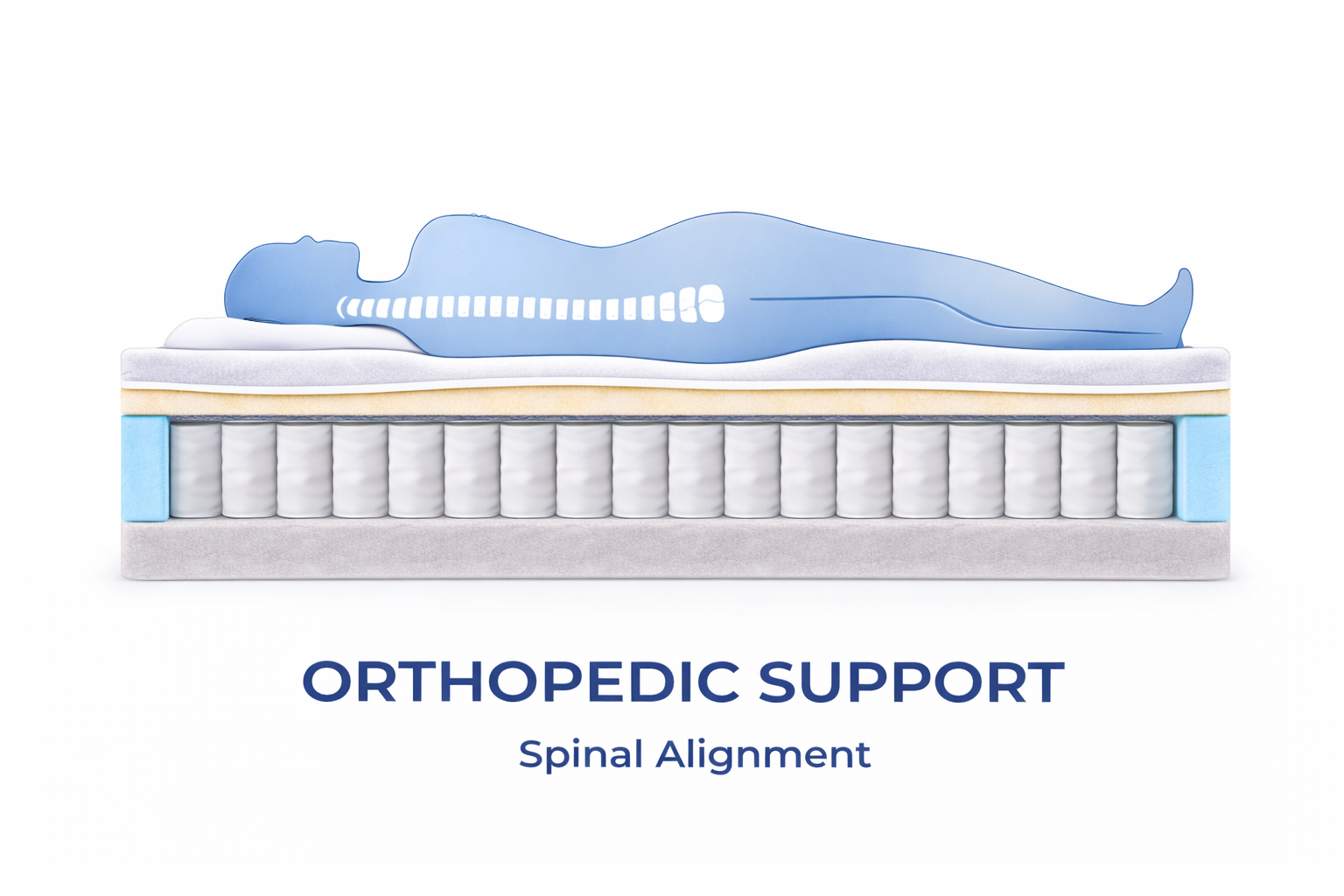
An orthopedic mattress is usually chosen for support, structure, and better alignment through the spine and lower back. It matters because mattress support affects posture during sleep, pressure at the hips and shoulders, and whether the body stays level through the night. This guide is for shoppers trying to figure out whether an orthopedic mattress is actually the right answer for back pain and support needs. One common misunderstanding is that orthopedic means the hardest mattress in the store. Furniture Spot’s current orthopedic page says that is not true. An orthopedic mattress is supposed to focus on spinal support, but it is not automatically the hardest option available.
At Furniture Spot & Mattress Outlet in Halifax, the current orthopedic collection is positioned around spinal support first, with examples that include pocket coil, memory foam, and hybrid orthopedic options. The page also says orthopedic mattresses tend to work best for back sleepers needing steady lumbar support, people dealing with chronic back pain or lower-back stiffness, heavier sleepers needing stronger structure under sustained weight, and stomach sleepers who want a more level surface.
What is an orthopedic mattress?
Furniture Spot’s current orthopedic page defines an orthopedic mattress as one designed to provide firmer, more structured support that keeps the spine properly aligned during sleep. It also says the term originally came from the medical community but is now widely used in the mattress industry for mattresses built around spinal support, posture, and reduced pressure on joints and muscles.
That definition matters because “orthopedic” is about support purpose, not one single material or top style. Furniture Spot’s current page says an orthopedic mattress may use a high-density foam core, a structured pocket-coil system, or a PRO-BACK construction aimed at spinal support. So orthopedic is not the same thing as saying foam, coil, plush, or firm by itself.
Are orthopedic mattresses good?
Yes, they can be very good for the right sleeper. Furniture Spot’s current orthopedic page says orthopedic mattresses are especially useful for shoppers who need more consistent lumbar support, people whose hips drop out of alignment on softer beds, and heavier sleepers who need a mattress that maintains its support structure under more weight.
But “good” still depends on the body using it. The same live page says side sleepers can still use orthopedic mattresses when there is enough surface cushioning to prevent pressure buildup at the shoulders and hips, and it warns that a completely rigid orthopedic mattress can create discomfort for side sleepers. That is a useful reminder that support and comfort still need to work together.
Is an orthopedic mattress good for back pain?
Sometimes yes, but not automatically. Furniture Spot’s current orthopedic page says back pain is the most common reason shoppers specifically look for an orthopedic mattress, and it explains that a mattress that is too soft can allow the hips to drop out of alignment, creating lower-back tension that builds during the night. The same page says an orthopedic mattress with proper spinal support keeps the body level and helps prevent that kind of misalignment.
That said, Consumer Reports’ current back-pain guidance says the broader goal for back pain is neutral spinal alignment, and it recommends medium-firm as the most common starting point because it tends to support the natural curves of the spine without creating uncomfortable pressure points. In other words, orthopedic can help if the issue is lack of support, but the best answer for back pain is not always “go firmer.” The better answer is “choose the mattress that keeps your spine neutral.”
So the most accurate answer is this: an orthopedic mattress can be good for back pain when softer mattresses let the hips sink too far and create misalignment, but it is not a universal solution for every back-pain shopper. Furniture Spot’s page is careful about that too. It says a mattress can significantly reduce pain, but it is still only one part of the bigger picture.
Who is an orthopedic mattress best for?
Furniture Spot’s current orthopedic page gives a very clear list of best-fit shoppers. It says orthopedic options consistently work best for:
- back sleepers who need consistent lumbar support
- people dealing with chronic back pain or lower-back stiffness
- customers told by a chiropractor or physiotherapist to look for firmer support
- heavier sleepers who need stronger structure under sustained weight
- stomach sleepers who need the flattest and most level sleep surface possible
That makes orthopedic strongest for sleepers whose main issue is sagging or loss of alignment, not just wanting a mattress that feels firmer at first contact. If the problem is pressure at the shoulders and hips instead, the right orthopedic build may still need enough cushioning on top to avoid creating new discomfort. Furniture Spot’s current orthopedic FAQ says exactly that for side sleepers.
Does an orthopedic mattress have springs?
Sometimes yes, and sometimes no. Furniture Spot’s current orthopedic page is very clear that orthopedic mattresses can be built with a high-density foam core, a structured pocket-coil system, or a hybrid support design. Its live orthopedic collection specifically lists models like the Megnaflix PRO-BACK Pocket Coil Mattress, the Velora Gel Memory Foam Mattress, and the Comfort Best Hybrid as orthopedic options.
So the right answer is that an orthopedic mattress does not have to have springs. Some do. Some do not. The more important question is whether the support system, whatever it is made from, keeps your body aligned and supported through the night.
Are orthopedic mattresses good for side sleepers?
They can be, but only under the right conditions. Furniture Spot’s current orthopedic FAQ says orthopedic mattresses can work for side sleepers when they have enough surface cushioning to prevent pressure buildup at the shoulders and hips. The same FAQ also warns that a completely rigid orthopedic mattress will create discomfort for side sleepers.
That means the better question is not just “orthopedic or not?” It is “does the mattress balance spinal support with enough comfort at the contact points?” Side sleepers usually need some give at the shoulder and hip. So the right orthopedic mattress for a side sleeper is usually one that supports the spine without feeling hard and sharp at the surface.
What to look for in an orthopedic mattress
The first thing to compare is the support system. Furniture Spot’s current orthopedic page says the support may come from high-density foam, structured pocket coils, or a hybrid build. That means shoppers should compare not just the word “orthopedic,” but also how the mattress is actually built.
The second thing to compare is your sleep position and body weight. Furniture Spot says orthopedic options often help back sleepers, stomach sleepers, and heavier sleepers more consistently. Consumer Reports’ back-pain guidance adds that neutral alignment is still the end goal, which means a mattress can be orthopedic in intention and still be the wrong fit if it is too hard or too soft for your body.
The third thing to compare is whether the mattress gives you support without pressure. A mattress that feels supportive but creates new pain at the shoulders, ribs, or hips is still the wrong mattress. Furniture Spot’s current orthopedic FAQ points directly to that issue when it says completely rigid orthopedic mattresses can be uncomfortable for side sleepers.
A simple way to choose the right orthopedic mattress
Choose an orthopedic mattress if:
- softer mattresses let your hips sag
- your lower back feels unsupported through the night
- you are a back sleeper or stomach sleeper needing a more level surface
- you are a heavier sleeper who compresses softer beds too much
Compare medium-firm first if:
- back pain is the reason you are shopping
- you still want some cushioning at the surface
- you are not sure whether your problem is sagging or pressure
- you want a broader starting point for neutral spinal alignment
Compare orthopedic models with cushioning on top if:
- you are a side sleeper
- your shoulders or hips get sore on rigid surfaces
- you need support, but not a completely hard-feeling bed
FAQ
What is an orthopedic mattress?
Furniture Spot defines it as a mattress designed to provide firmer, more structured support that keeps the spine aligned during sleep, with a focus on posture and reduced pressure on joints and muscles.
Are orthopedic mattresses good?
They can be very good for the right sleeper, especially back sleepers, heavier sleepers, and shoppers needing stronger lumbar support. But they are not automatically right for every sleep position or body type.
Is an orthopedic mattress good for back pain?
Sometimes yes. Furniture Spot says they can help when softer mattresses let the hips drop out of alignment, but Consumer Reports says medium-firm is still the most common starting point for neutral spinal alignment and back-pain support.
Does an orthopedic mattress have springs?
Not always. Furniture Spot says orthopedic mattresses can use pocket coils, high-density foam, or hybrid support systems.
Are orthopedic mattresses good for side sleepers?
They can be, but only when the mattress has enough surface cushioning to prevent pressure buildup at the shoulders and hips. Furniture Spot says a completely rigid orthopedic mattress can create discomfort for side sleepers.
Reality Check
Common mistakes people make:
- assuming orthopedic means the hardest mattress available
- choosing only by the label instead of the support construction
- treating firm support as automatically best for every kind of back pain
- ignoring body weight and sleep position
- forgetting that pressure relief still matters, especially for side sleepers
Limitations and what can go wrong:
- an orthopedic mattress can still feel wrong if it is too rigid for your body
- a side sleeper can develop new pressure pain on a mattress that is too hard
- a back-pain shopper may still do better on medium-firm if extra firmness creates pressure points
- “orthopedic” alone does not guarantee the right fit, because foam, pocket-coil, and hybrid orthopedic builds can all feel very different
Who orthopedic mattresses are best for:
- back sleepers
- heavier sleepers
- stomach sleepers
- shoppers whose main problem is sagging and loss of spinal alignment
- people specifically shopping for stronger lumbar support
Who should think twice:
- many pressure-sensitive side sleepers
- shoppers who assume “harder is healthier”
- anyone choosing by the orthopedic label without testing the feel and support underneath
Related reading
- Orthopedic Mattresses in Halifax, NS
- Furniture Spot & Mattress Outlet Halifax
- Best Mattresses for Back Pain