Mattress in a Box vs Traditional Mattress: Real Differences That Matter
Mattress-in-a-box products have become common, but the compressed shipping format changes more than just how the mattress arrives. Here's what actually differs.
How Mattress-in-a-Box Products Are Made
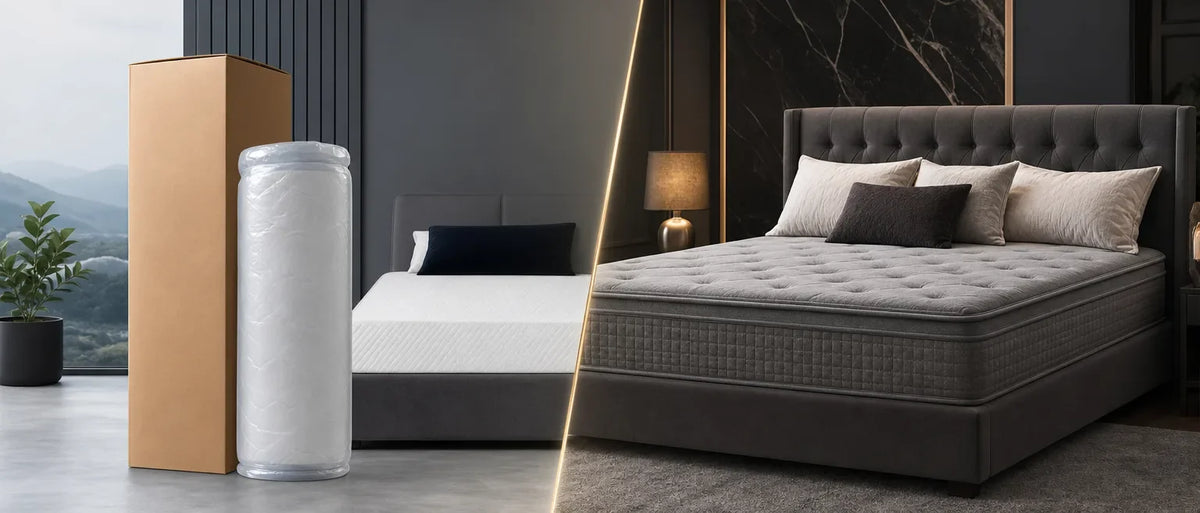
These mattresses are compressed and rolled under industrial pressure, then vacuum-sealed for shipping in a compact box. This process works well for foam and many hybrid constructions, but is generally not suitable for traditional innerspring mattresses with rigid coil structures.
Delivery and Setup Differences
A boxed mattress is easier to transport up narrow stairwells or through tight apartment hallways — a real advantage in Halifax's older peninsula walk-ups — since the compressed size fits through spaces a full-size traditional mattress cannot. Traditional mattresses require full-size delivery access but are ready to sleep on immediately, without an expansion waiting period.
Expansion Time and Initial Off-Gassing
Most boxed mattresses need 24–72 hours to fully expand and reach their intended firmness after unboxing. Some off-gassing odor is common in the first few days as the foam releases compounds from the compression process, which typically fades with ventilation.
Long-Term Durability Comparison
Once fully expanded, a quality boxed mattress performs comparably to a traditional mattress of the same materials — the compression process itself doesn't meaningfully shorten lifespan for most modern foam and hybrid designs. Durability comes down to the materials and construction quality, not the shipping method.
Which Format Is Right for Your Halifax Home
Choose a boxed mattress if you're navigating tight stairwells, moving frequently, or want a simpler delivery process. Choose a traditional mattress if you want to test firmness in-store first or need it ready to use immediately. Browse both formats in our mattress-in-a-box collection or the full mattress collection, delivered throughout Halifax.