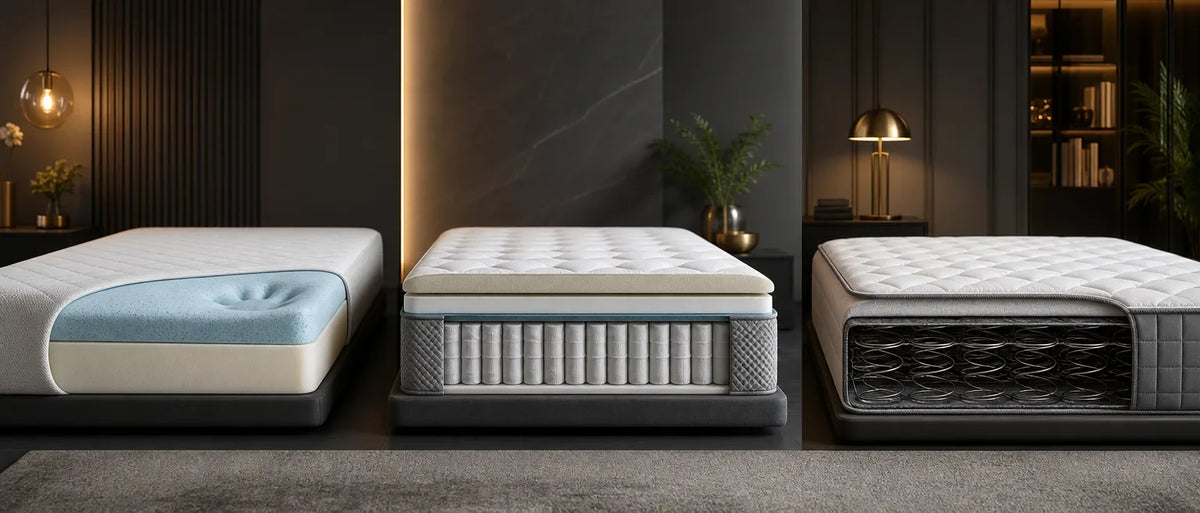
Memory Foam vs Hybrid vs Innerspring Mattress: Which Should You Buy
These three mattress types are built on fundamentally different support systems, and the right one depends on how you sleep, not which is objectively "best."
How Each Mattress Type Is Built
Memory foam mattresses use layered foam throughout, with no coil system, contouring closely to the body. Innerspring mattresses rely on a coil support system topped with a thinner comfort layer, offering more bounce and airflow. Hybrid mattresses combine a coil support core with thicker foam comfort layers on top, aiming to balance both approaches.
Best Option by Sleep Position
Side sleepers generally do best on memory foam or hybrid mattresses, since the contouring relieves pressure at the shoulders and hips. Back and stomach sleepers often prefer the firmer, more even support of an innerspring or firmer hybrid, which prevents the hips from sinking too deeply.
Temperature and Motion Isolation Differences
Innerspring mattresses sleep the coolest due to open airflow through the coils, which some Halifax shoppers prefer given warmer, humid summers in the region. Memory foam tends to retain more body heat, though modern gel-infused foams reduce this. Hybrids sit in between. For motion isolation — important for couples — memory foam performs best, followed by hybrid, with innerspring transferring the most motion.
Durability and Long-Term Support
Innerspring mattresses typically show sagging in the coils first, usually within 7–10 years of regular use. Memory foam is prone to softening in high-pressure areas over similar timeframes. Hybrids often last slightly longer due to the combined support structure, though quality of materials matters more than category alone.
Which Type Should You Buy
Choose memory foam if pressure relief and motion isolation matter most, innerspring if sleeping cool and traditional bounce matter most, and hybrid if you want a balance of both. Compare all three across our hybrid, memory foam, and innerspring collections at our Halifax store.