Metal Bed Frame vs Wood
Choosing between a metal bed frame and a wood bed frame matters because the frame affects support, bed height, room style, weight, and delivery access. This guide is for Canadian shoppers replacing an old frame, buying a new mattress setup, or comparing materials before they spend. A common misunderstanding is that wood is always stronger than metal, but the real answer depends on the frame design, centre support, slats, and build quality.
What is the main difference between a metal bed frame and a wood bed frame?
A metal bed frame is usually built with steel or other metal components and often has a simpler, lighter structure. A wood bed frame is built with wood or engineered wood and usually has a warmer, more furniture-style look.
The biggest practical differences are usually:
-
weight
-
appearance
-
support design
-
assembly style
-
noise over time
-
how the frame works with slats or a box spring
Neither material is automatically the right choice for every room. The better option depends on the mattress, room layout, and how the frame is built.
Which one is stronger?
Strength depends more on the construction than the material alone.
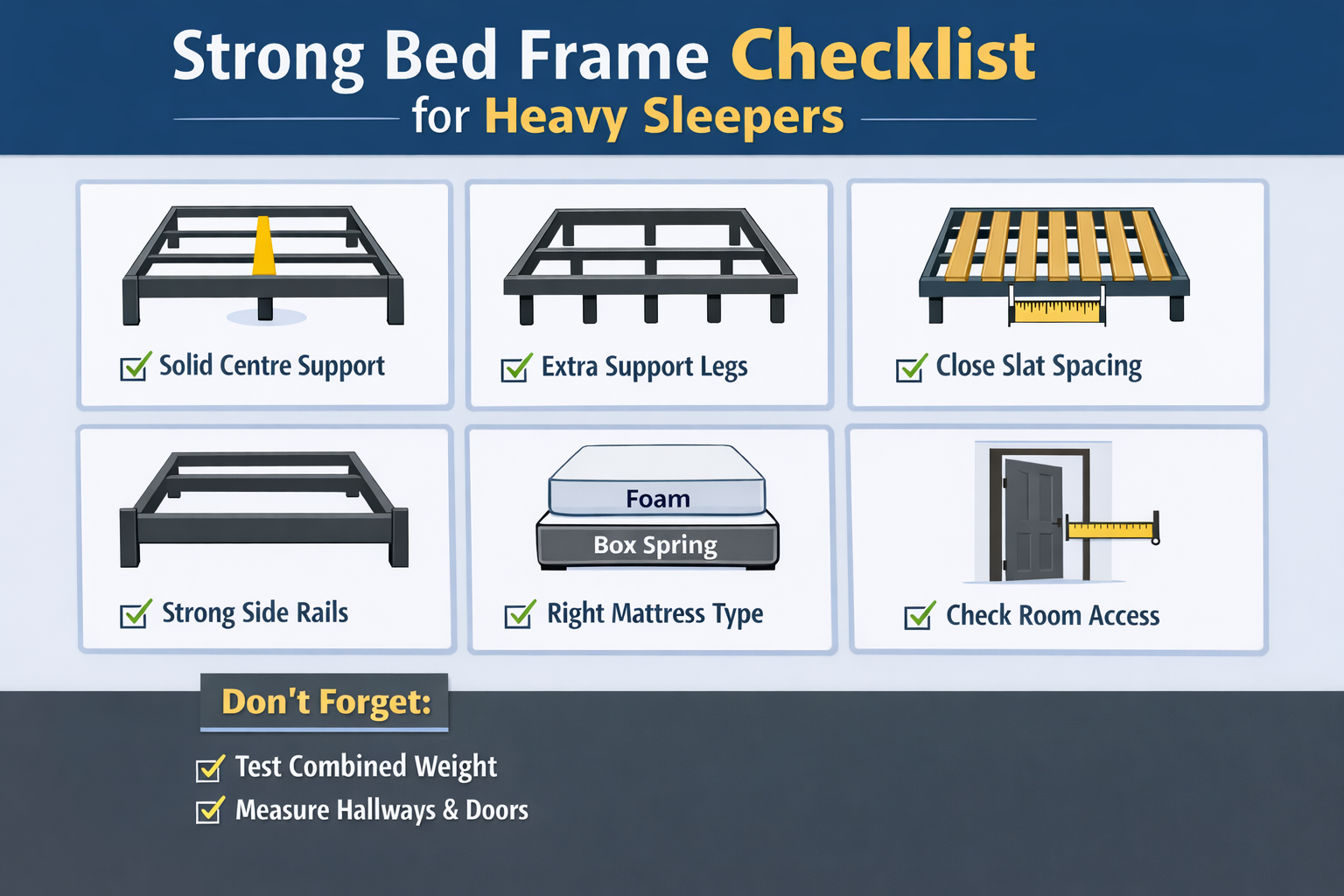
A metal frame can be very supportive if it has:
-
a solid centre support
-
enough legs under the middle
-
stable joints
-
proper slat or foundation support
A wood frame can also be very supportive if it has:
-
strong side rails
-
centre support for larger sizes
-
durable slats
-
well-secured hardware
For Queen and King sizes, centre support matters a lot. A frame without enough middle support may have problems over time no matter which material you choose.
If you use a platform bed, confirm slat spacing and support requirements.
Which one is lighter and easier to move?
Metal bed frames are often lighter and easier to carry in parts. That can make a difference in apartments, stair-heavy homes, and tighter bedrooms.
Wood bed frames are often heavier. Some buyers prefer that because the frame may feel more solid in place, but it can also make moving and assembly harder.
Before buying, measure your doorway, hallway turns, and stairs.
This matters even more if the headboard, footboard, or side rails are one large piece.
Which one is quieter?
Noise is not only about the material. It usually comes from loosened joints, hardware movement, or slats shifting.
A metal frame may start to squeak if:
-
bolts loosen over time
-
metal parts rub together
-
the floor is uneven
A wood frame may make noise if:
-
joints loosen
-
slats shift
-
the frame dries out or moves slightly with use
A well-built frame that is assembled properly can reduce noise in either material. Checking and tightening hardware from time to time also helps.
Which one looks better in a bedroom?
This depends on the style of the room.
Metal bed frames often suit:
-
simpler setups
-
modern or industrial looks
-
guest rooms
-
lower-cost room updates
Wood bed frames often suit:
-
warmer bedroom styles
-
traditional or transitional rooms
-
furniture-matched bedroom sets
-
shoppers who want a softer visual feel
Wood usually feels more like a furniture piece. Metal usually feels more practical and minimal. At Furniture Spot & Mattress Outlet in Halifax, the better choice is usually the one that fits the room and mattress setup, not just the one that looks nicer in a photo.
Which one works better with different mattress setups?
Both metal and wood bed frames can work well, but the support system matters.
Check whether the frame is designed for:
-
a mattress only
-
a slatted mattress base
-
a box spring
-
a full platform setup
Some metal frames are made to hold a box spring. Some wood frames include slats and are meant to support the mattress directly.
A common mistake is focusing on the outside material and forgetting to check what the mattress actually rests on.
If you use a platform bed, confirm slat spacing and support requirements.
Which one is better for small rooms?
Metal frames often work well in small rooms because many designs are visually lighter and take up less visual space. Some also leave more open space underneath the bed.
Wood frames can still work well in small rooms, but heavier headboards, footboards, or thicker side rails may make the room feel fuller.
If your room is small, plan walking clearance on both sides.
Before choosing, measure:
-
room width
-
room length
-
bed width
-
clearance beside the bed
-
clearance at the foot of the bed
-
drawer space if the frame includes storage
Which one is easier to clean and maintain?
Metal frames are usually straightforward to wipe down and inspect. Dust can still collect underneath, but the frame itself is often simple to maintain.
Wood frames may need a little more attention depending on finish and design. Grooves, panels, and storage details can collect more dust.
For both frame types:
-
tighten hardware if needed
-
check slats and supports
-
inspect legs and centre rails
-
keep the frame level on the floor
Which one may last longer?
There is no single answer based only on material. A well-built metal frame can last a long time. A well-built wood frame can also last a long time.
What usually matters most is:
-
frame design
-
hardware quality
-
centre support
-
slat quality
-
weight distribution
-
how the frame is assembled and used
A weaker design will still be a weaker design, even if the material sounds strong in the product title.
What should you check before buying either one?
Use this checklist before you buy:
-
confirm mattress size
-
check whether the frame needs a box spring
-
check whether slats are included
-
confirm centre support for Queen and King
-
measure total bed height
-
measure doorway, hallway, and stairs
-
check underbed clearance if storage matters
-
check room walking clearance
If you share the bed, consider motion transfer and personal space.
Which one suits different shoppers?
A metal bed frame may suit:
-
renters
-
apartment shoppers
-
buyers who want a simpler frame
-
smaller rooms
-
buyers who want easier movement and assembly
A wood bed frame may suit:
-
homeowners
-
shoppers matching other bedroom furniture
-
buyers who want a warmer furniture look
-
people choosing a more traditional bedroom style
The better option is usually the one that matches your mattress support needs, room space, and preferred look.
FAQ
Is a metal bed frame better than wood?
Not always. A metal frame may be lighter and simpler, while a wood frame may suit shoppers who want a warmer furniture look. Support design matters more than material alone.
Do wood bed frames need a box spring?
Some do and some do not. It depends on whether the frame includes slats or is designed around a separate foundation.
Are metal bed frames noisy?
They can be if hardware loosens or parts rub together. A properly assembled metal frame can be stable and quiet.
Are wood bed frames stronger than metal?
Not automatically. The strength depends on the frame design, centre support, slats, and hardware.
Which is better for a Queen mattress?
Either can work for a Queen mattress if the frame has the right support. The key is checking slat spacing, centre support, and whether a box spring is required.
Reality Check
A common mistake is buying based only on appearance and ignoring the support design underneath. Another is assuming all metal frames are flimsy or all wood frames are stronger. Buyers also forget to check stair access, total bed height, and whether the mattress needs slats or a box spring.
What can go wrong includes poor centre support, the wrong foundation setup, a frame that feels too bulky for the room, or delivery problems getting larger parts upstairs. Returns can also be harder if the issue is room fit or access rather than product defect.
A metal bed frame is often a practical fit for renters, smaller spaces, and simpler bedroom setups. A wood bed frame may suit buyers who want a more furniture-style look or are matching other bedroom pieces. Shoppers who should slow down and double-check are those buying Queen or King sizes, using thicker mattresses, or dealing with narrow stairs and tight corners.