Practical Challenges of Repositioning Sectionals
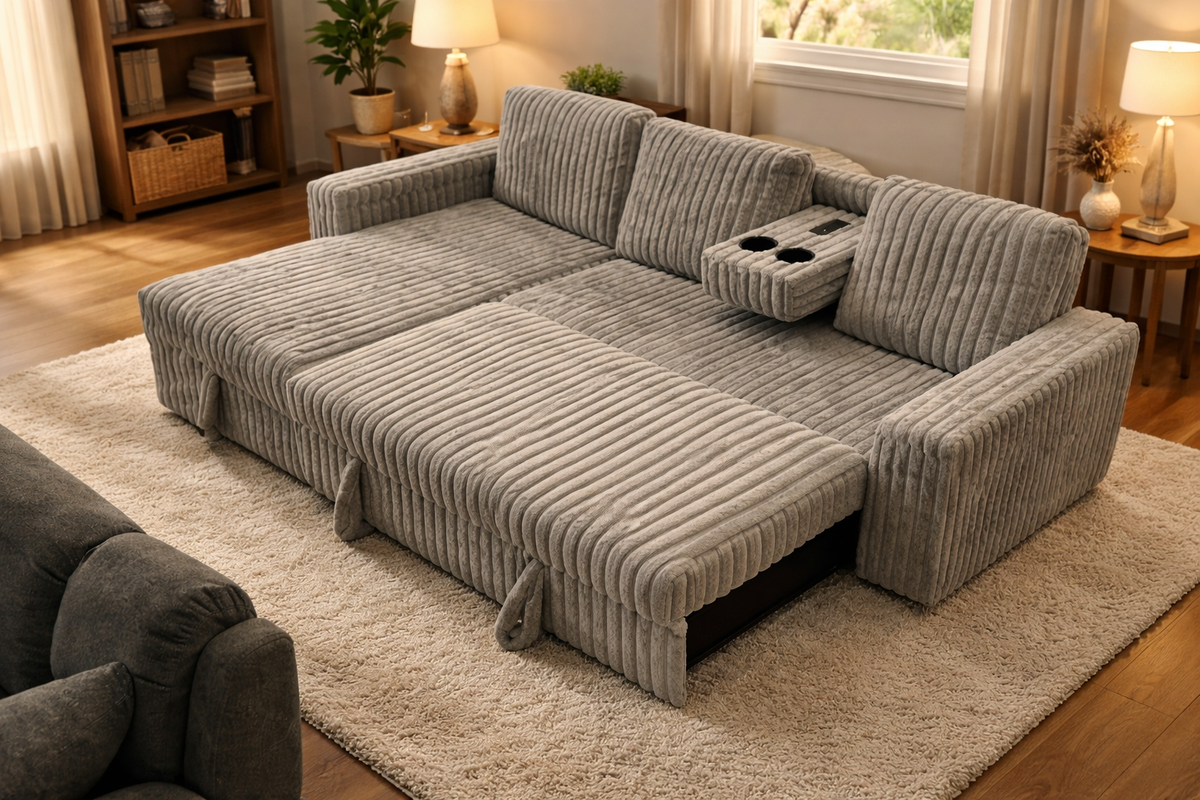
Sectionals offer flexible seating and efficient use of space, but that flexibility can come with practical challenges. Repositioning sectionals is not always as simple as moving a single sofa. For homes in Halifax and across Nova Scotia, understanding the realities of moving and rearranging sectionals helps prevent frustration, unnecessary wear, and unrealistic expectations.
Sectionals are designed to be modular, not constantly mobile.
Why Sectionals Are More Difficult to Move
Unlike standard sofas, sectionals are made up of multiple connected pieces. Each section has weight, connection hardware, and structural considerations that affect how easily it can be moved.
Common challenges include:
-
Heavy individual components
-
Connection brackets that must be aligned correctly
-
Limited clearance in hallways or staircases
-
Floor friction during repositioning
Even small layout changes can require more effort than expected.
Connection Systems and Alignment Issues
Sectionals rely on connectors to keep pieces aligned and stable during use. These connectors are designed for security, not quick release.
Repeated repositioning can lead to:
-
Loosening of connectors
-
Misalignment between sections
-
Increased movement between pieces during seating
-
Uneven stress on frames
These issues usually develop gradually and reflect frequent handling rather than defects.
Wear From Frequent Movement
Moving sectionals regularly adds stress beyond normal sitting use.
Potential effects include:
-
Increased wear at joint connection points
-
Minor frame shifts over time
-
Fabric wear along edges where sections rub
-
Greater pressure on legs during lifting or dragging
Dragging sections instead of lifting can accelerate floor and furniture wear.
Room Layout Limitations in Halifax Homes
Many Halifax homes have room layouts that limit how easily large furniture can be repositioned. Narrow doorways, staircases, and older floor plans can restrict sectional movement.
What fits well in one configuration may be difficult to adjust without disassembling the entire sectional.
Setting Realistic Expectations for Flexibility
While sectionals are modular, they are not designed for frequent reconfiguration. Most perform best when placed in a planned layout and left in position.
Occasional repositioning is reasonable, but repeated changes can affect long-term stability and appearance.
Planning Ahead Reduces Challenges
Before choosing a sectional, it helps to consider:
-
Room dimensions and walking paths
-
Entry points and stair access
-
Long-term layout preferences
-
Whether flexibility is occasional or frequent
Planning reduces the need for repeated movement and supports better long-term performance.
Conclusion: Stability Comes From Consistency
The practical challenges of repositioning sectionals stem from their size, weight, and connection systems. While they offer excellent seating capacity, they are best treated as semi-permanent fixtures rather than frequently moved furniture.
Understanding these limitations helps homeowners enjoy the benefits of sectionals while minimizing wear, stress, and unnecessary handling over time.
Store Information
Furniture Spot & Mattress Outlet
3606 Strawberry Hill St, Halifax, NS B3L 3B4
(902) 406-3939