Entryway Storage That Survives a Nova Scotia Winter
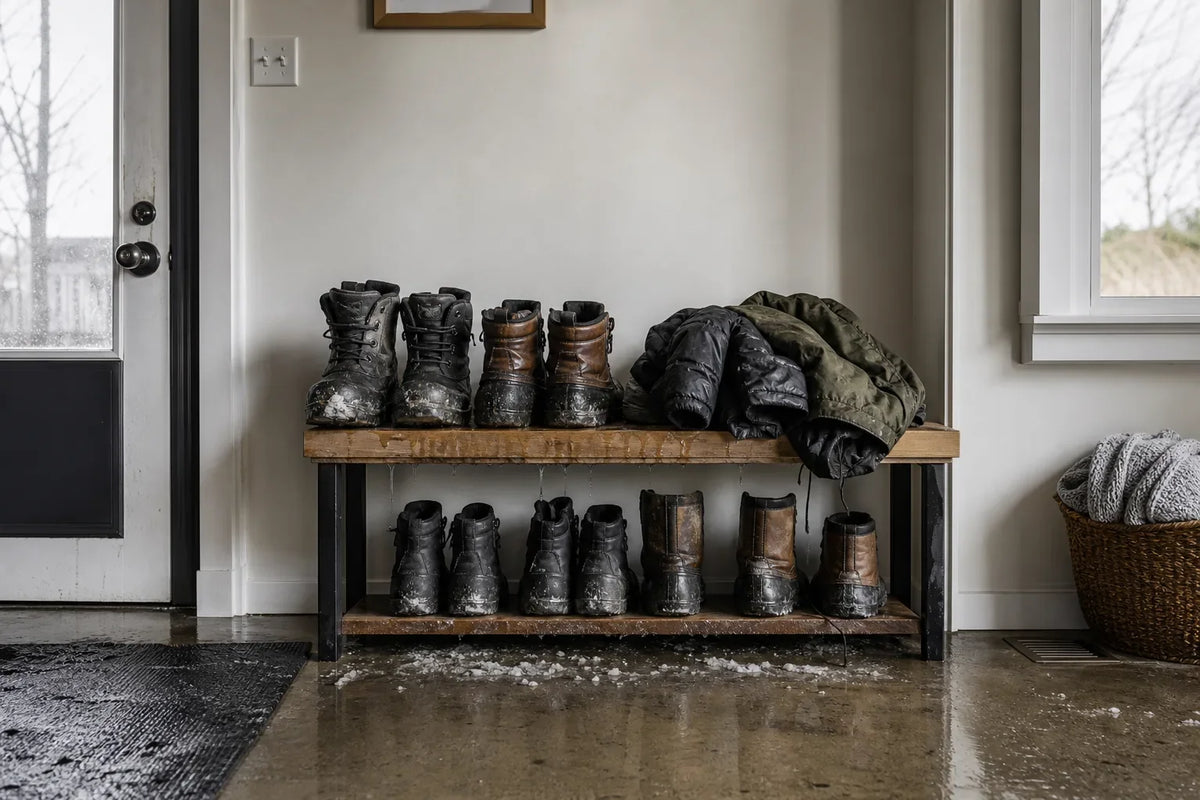
The mistake is buying an entryway bench for how it looks in October. By late January that bench is holding four pairs of salt-crusted boots, two wet coats, and a puddle, and the question is no longer whether it suits the hallway. It is whether the finish has survived.
Halifax winters are wet more than they are cold. Freeze-thaw cycles, salt on every sidewalk, and slush rather than dry snow mean whatever sits by your door spends four months absorbing moisture and chloride.
Wet is the design constraint
Anything with an unsealed wood base sitting directly on the floor will wick moisture from a puddle and stain. Look for a piece with legs that lift the body off the floor, a sealed or laminated finish, and ideally a removable tray or a slatted lower shelf that lets boots drain and air rather than sitting in their own meltwater.
Metal frames handle wet better than wood, and powder-coated metal handles salt better than bare or painted metal. Within a few blocks of the harbour, that difference shows up within a couple of seasons.
Boots need airflow, not a cupboard
A closed shoe cabinet is the wrong choice for winter footwear. Wet boots in a sealed box stay wet, and by March the cabinet smells and the lining is damaged. Slatted shelving, an open lower tier, or a simple boot tray does the job better.
Two-tier trays are worth the small extra cost because they hold more pairs in the same floor footprint, which matters in the narrow vestibules that older Halifax houses have instead of entryway space.
Seating earns its place
A bench is not decorative in this climate. Putting on and taking off winter boots standing up is how people fall in their own hallway, and it is a genuine issue for anyone with balance or mobility concerns. If the entryway will take a bench at all, put one there.
Seat height around 18 inches suits most adults for this. Storage under the seat is useful, but only if the compartment is open or ventilated, for the reason above.
Vertical space in a small vestibule
Most older homes here have an entry that is too narrow for a bench and a coat rack side by side. Hooks mounted on the wall above a shallow bench give you both without competing for floor area. Mount hooks at two heights if there are children in the house, and use wall studs; a loaded coat rack pulls hard on drywall anchors.
A wall-mounted shelf above the hooks holds hats and gloves and keeps them off the bench, which is otherwise where everything ends up.
The maintenance nobody does
Wipe salt residue off the tray and the floor weekly through the winter. Dried salt left on a finish continues to draw moisture and is the mechanism behind most of the damage. Ten seconds with a damp cloth is the whole job.
Our storage benches come in leatherette and fabric, and leatherette is the one to choose for a wet entry
Our storage benches and ottomans are the pieces most people use for this, and the leatherette finishes hold up to salt better than fabric does.
entryway furniture. Related: cleaning resistance of furniture surfaces and how routine care extends furniture life.