Coastal Humidity and Solid Wood Furniture
A solid wood tabletop 40 inches across can change width by a quarter of an inch between a damp August and a dry February. That movement is normal, it is unavoidable, and it explains most of what people mistake for defects in wood furniture in this province.
Nova Scotia gives wood a harder time than most of the country. Summers here are humid and coastal, winters are dry indoors because heating systems strip moisture out of the air, and the swing between the two is wide. Wood absorbs and releases moisture across that swing, expanding and contracting across the grain while staying almost fixed along it.
What that looks like in your house
Drawers that slide easily in January and stick in August are the classic sign. The drawer sides have swollen against the case. Nothing is broken and planing the drawer down in summer is a mistake you will regret in February, when it will rattle loose in an oversized opening.
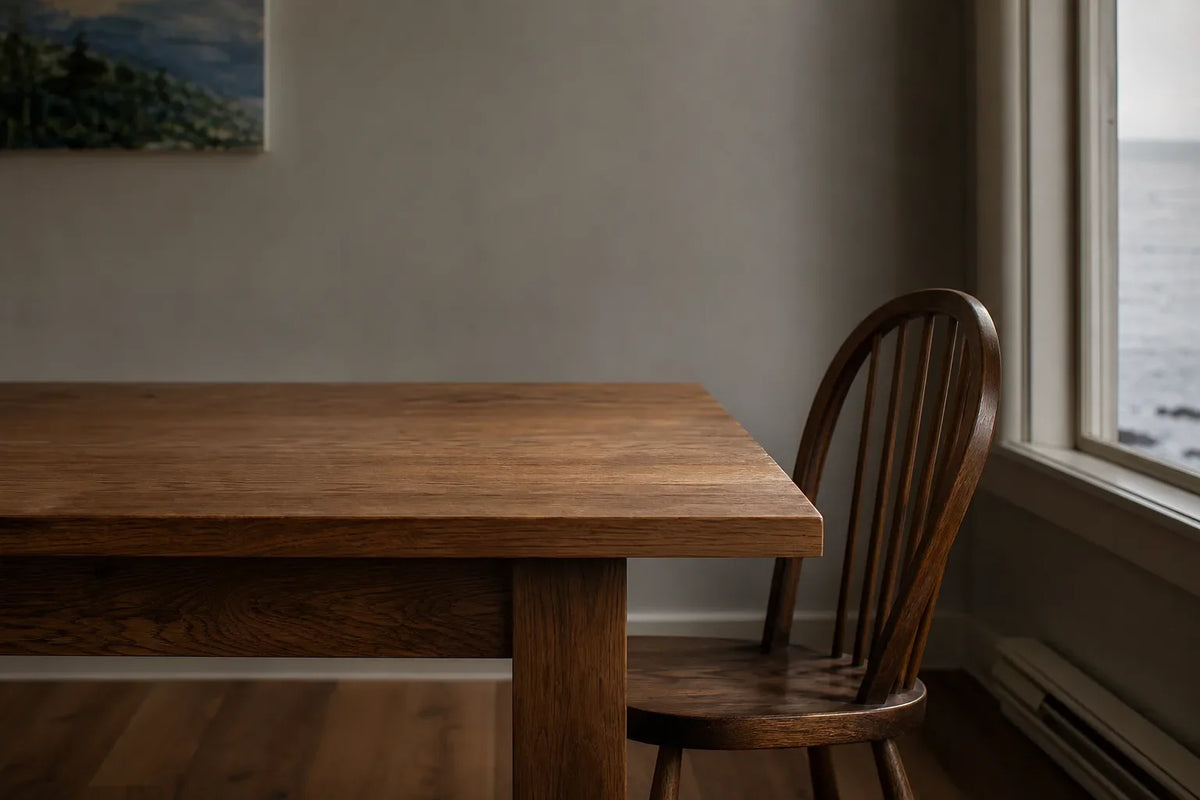
Fine gaps opening between the boards of a tabletop in midwinter are the same phenomenon in reverse. Well-built furniture is designed to allow this movement; table tops are attached with clips or slotted fasteners specifically so the top can move relative to the base. A top screwed down rigidly is the one that splits.
Doors on a cabinet that sit flush in one season and slightly proud in another are also this. So is a chair joint that creaks in one season more than the other.
The range to aim for
Indoor relative humidity between roughly 40 and 55 percent keeps movement within a range wood handles comfortably. A cheap hygrometer tells you where you actually are, and most Halifax homes sit well above that in August and well below it in January.
A dehumidifier in a damp basement and a humidifier in a dry heated bedroom are the two tools. The goal is not a perfect number, it is a smaller swing.
Placement is more important than any product
Keep solid wood away from heat registers, radiators, and direct sun through a south-facing window. Uneven drying is what causes actual damage; even seasonal change rarely does. A table with one end in the sun and one end in shade dries unevenly and cups.
In a basement apartment or a damp ground floor, keep wood pieces slightly off the wall so air moves behind them, and do not push a solid wood dresser flat against an exterior wall that runs cold.
Engineered wood and veneered panels move far less and are the sensible choice for genuinely damp rooms. This is one of the few situations where a well-made veneered piece outperforms solid wood rather than merely costing less Ask which construction a piece uses before you buy it for a damp room; it is rarely stated on the tag.
Salt air
Close to the water, salt affects metal hardware more than it affects wood. Hinges, drawer pulls, and bed frame fasteners corrode faster within sight of the harbour. Wipe hardware occasionally and check bolts for corrosion when you do the annual tightening round.
If you are furnishing a damp basement or a room close to the water, tell us and we will point you at the constructions that handle it rather than the ones that look best on the floor.
solid wood furniture. Related: moisture-related issues in bedroom furniture and daily use differences between MDF and solid wood.