


What Furniture Can You Bring to Long-Term Care in Nova Scotia?
Ask the specific long-term care facility before bringing any furniture because room layouts, supplied items, fire-safety rules and infection-control practices vary. Once you have its written list and room measurements, prioritize one comfortable chair, compact storage and familiar personal items that do not obstruct care or movement.
Ask the facility first
Request a current move-in package and speak with the staff member responsible for admissions or the room. Ask what the facility supplies and what residents may add.
Questions to ask include:
- Is the bed supplied, and may it be replaced?
- Are upholstered chairs permitted?
- Are there material or cleaning requirements?
- Must dressers, televisions or décor be secured?
- What floor and wall areas must remain clear?
- Who approves electrical furniture such as power recliners?
- Are delivery appointments or screening steps required?
- What happens when a resident changes rooms?
Get the approval in writing where possible. A furniture store can help with dimensions but cannot decide what the care team permits.
What families often consider bringing
A favourite recliner or chair can make the room feel familiar when approved and appropriately sized. A small dresser or side table may add useful storage if the room does not already provide it.
Photographs, a washable throw and a few familiar objects can matter more than a large matching furniture set. Leave open surface area for daily care and personal belongings.
Do not move a piece because it has always been in the family home if it is unstable, difficult to clean or too large for the room. Condition and function come before sentiment when space is limited.
Setting Up a Room for an Aging Parent covers a parent moving into a private home; facility approval makes this situation different.
Measure the actual room
Measure the clear wall segments, bed movement area, bathroom route, door swing, window, closet and any equipment. Ask facility staff which zones must remain open rather than deciding from an empty-room photograph.
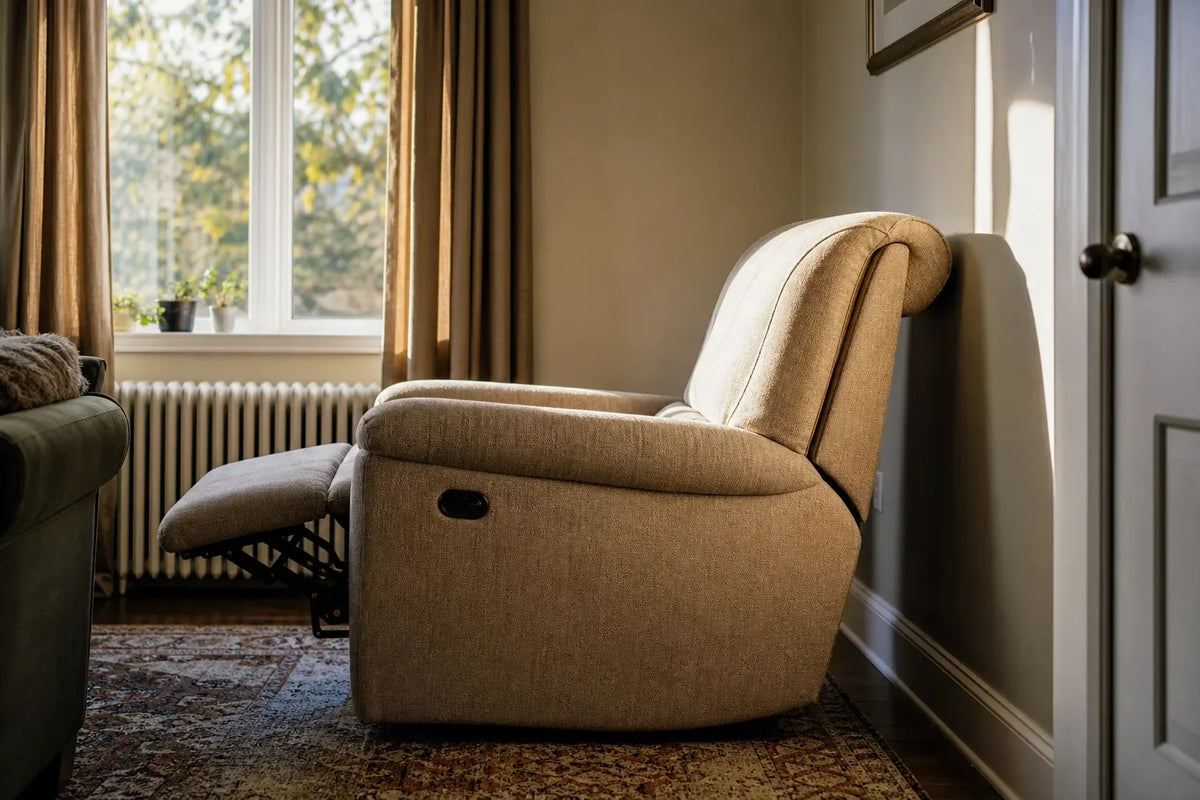
For every proposed piece, record width, depth, height and open depth. A recliner’s footrest and required wall clearance can more than double its working footprint.
Use painter’s tape only with facility permission. A scaled paper plan may be easier during the approval conversation.
Choosing a recliner
Seat height, depth and arm shape affect how the chair feels and how a person gets in and out. Health or mobility needs require advice from an occupational therapist or other qualified professional.
A manual recliner avoids a power cord but requires a particular motion or handle use. A power recliner offers powered adjustment but needs an approved outlet position and a cord route that does not create a hazard.
Manual vs Power Recliners compares mechanisms, and Wall-Hugger Recliners explains smaller clearance designs. Neither label guarantees facility approval.
Confirm manufacturer weight limits, wall clearance, full open depth and upholstery care. Avoid “medical,” “easy-clean” or infection-control claims unless the exact product documentation supports them and the facility accepts the material.
Delivery to a facility
Standard delivery is entryway only; room-of-choice, stairs and assembly apply only when confirmed. A care facility may also require a particular entrance, time or escort.
Measure elevators, doors and hall turns. Label the resident name and room according to facility instructions without displaying more personal information than necessary.
Inspect the furniture with the approved contact and keep the receipt and model information. Remove packaging promptly under the facility’s process.
A warm, practical move-in checklist
- Obtain the current facility rules
- Confirm what furniture is already supplied
- Measure the room and required clear zones
- Ask the care team about mobility needs
- Approve upholstery and electrical pieces
- Record full recliner open dimensions
- Schedule delivery through the facility contact
- Bring a few familiar, manageable personal items
- Reassess after the resident settles in
Avoid trying to finish the room in one day. The resident and care team may discover that a different chair position, less storage or another familiar item works better after normal routines begin.
Bring measurements to the showroom rather than relying on a room photograph. Include the clear path beside the bed and the space needed when the recliner is fully open. A compact chair that fits those limits can still feel familiar with a washable throw or cushion approved by the facility. This keeps the room personal without making routine care harder.
FAQ
What furniture can you bring to long-term care?
Only what the specific facility approves. Ask about beds, chairs, storage, electrical items, cleaning requirements and required clear space.
Can a resident bring their own recliner?
Many facilities may consider one, but size, condition, material, power cord and care needs can affect approval. Confirm before delivery.
How do I furnish a nursing-home room?
Start with the facility’s supplied items and written rules, then add a measured chair, compact storage or familiar décor without blocking care routes.
What size furniture fits a long-term care room?
There is no universal room size. Measure the actual room and include open recliner depth, door swings and staff-required clear zones.