Dining Table Materials Compared: Solid Wood vs Laminate vs Glass
The material a dining table is made from determines how it holds up to years of actual meals, not just how it photographs on day one. Here's how the three most common options compare under daily use.
Solid Wood: Durability and Long-Term Value
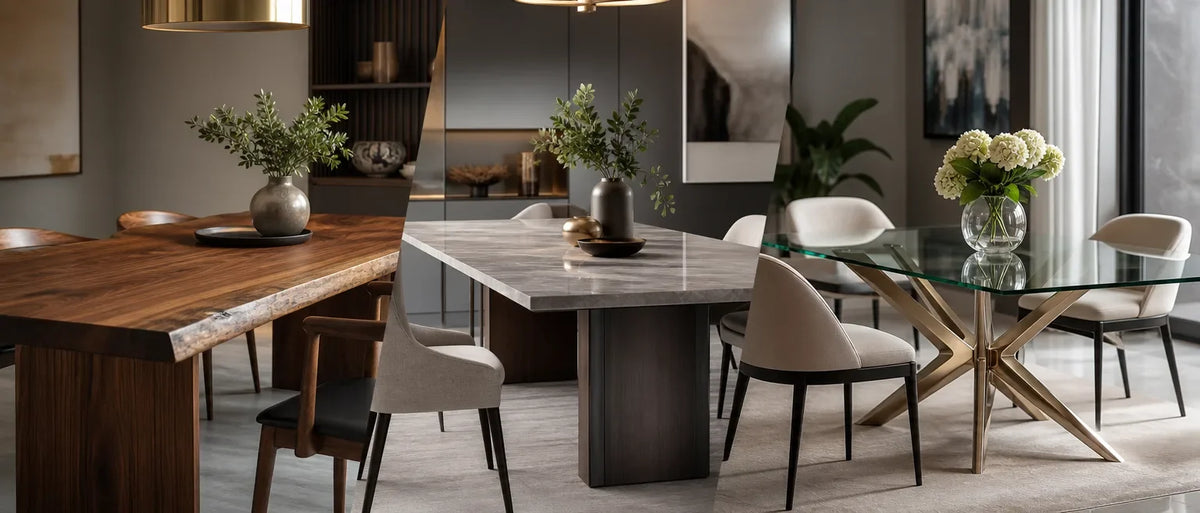
Solid wood tables handle daily wear the best of the three, and minor scratches or dents can often be sanded and refinished rather than requiring replacement. They cost more upfront, but the lifespan typically justifies the difference for a table you plan to keep for a decade or more.
Laminate: Budget-Friendly and Practical
Laminate surfaces resist scratches and stains reasonably well for the price and are easy to wipe clean, making them a practical choice for households with young children. The trade-off is that damage to a laminate surface usually can't be repaired — once the top layer is chipped, it's visible permanently.
Glass: Style Trade-Offs for Daily Use
Glass tables show fingerprints and water rings more visibly than wood or laminate, and require more frequent cleaning to look their best. They're also more prone to visible scratching from cutlery and dishware over time, even though the glass itself is durable structurally.
Scratch and Heat Resistance Compared
Solid wood with a quality finish handles hot dishes and daily scratches best of the three. Laminate resists heat reasonably well but can show cut marks if a knife touches the surface directly. Glass resists heat well but scratches more easily and shows every mark clearly.
Which Material Fits Your Household
Choose solid wood if you want a table that lasts and can be refinished later, laminate if budget and easy cleanup matter most, and glass if you're prioritizing a light, modern look and are comfortable with more frequent cleaning. Compare all three across our dining table collection.