Sectional Sofa Sizes Guide
Sectional size matters because the wrong layout can crowd the room, block traffic flow, or create delivery problems before it even gets inside. This guide is for condo shoppers, renters, families, and homeowners comparing sectional sizes for living rooms, basements, and open spaces. A common misunderstanding is that a sectional only needs to fit one wall, but overall depth, chaise length, corner shape, and walking clearance matter just as much.
What are the common sectional sofa sizes?
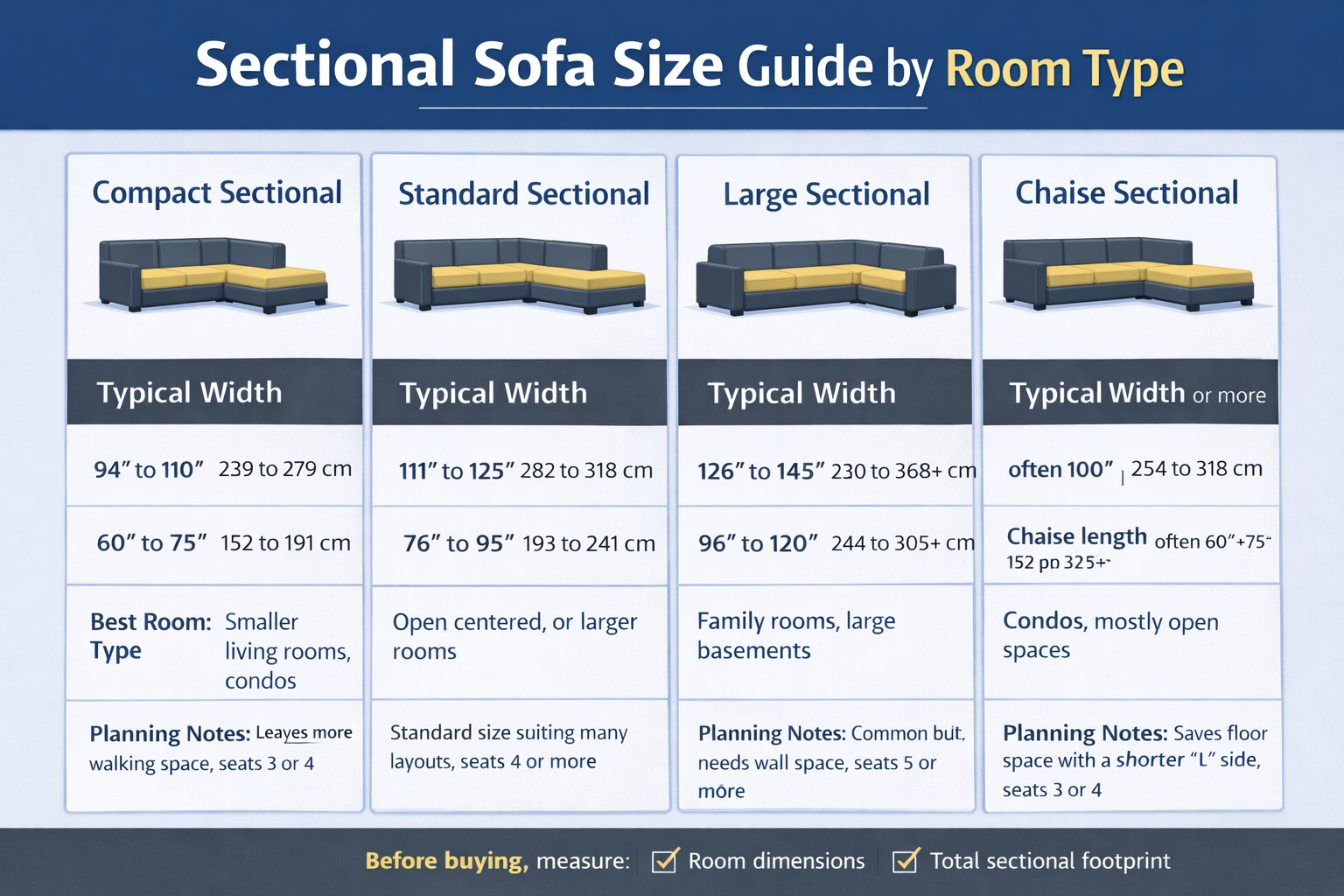
Most sectionals fall into a few planning ranges rather than one exact standard size. Exact dimensions vary by model, arm style, seat depth, and whether the sectional includes a chaise or corner wedge.
| Sectional Type | Typical Width | Approx. cm | Typical Depth / Return | Approx. cm |
|---|---|---|---|---|
| Compact sectional | 94" to 110" | 239 to 279 cm | 60" to 75" | 152 to 191 cm |
| Standard sectional | 111" to 125" | 282 to 318 cm | 76" to 95" | 193 to 241 cm |
| Large sectional | 126" to 145"+ | 320 to 368+ cm | 96" to 120"+ | 244 to 305+ cm |
| Sectional with chaise | often 100" to 125" | 254 to 318 cm | chaise length often 60" to 75" | 152 to 191 cm |
Brands can vary slightly, so tolerances happen. A sectional listed at 112" wide in one collection can feel much larger than another if it has wider arms or deeper seats.
What measurements matter most for a sectional?
Width is important, but it is not enough on its own. You should also check:
-
overall depth
-
chaise length
-
seat depth
-
arm width
-
back height
-
corner shape
-
orientation, left-hand or right-hand
-
clearance around the outer edge
A sectional can fit the wall and still feel too large if the return side cuts into the room too much.
Before buying, measure your doorway, hallway turns, and stairs.
What sectional size works best in a small living room?
For smaller rooms, compact sectionals or sectionals with a shorter chaise are often easier to place. The goal is usually to add seating without using so much floor space that the room becomes harder to move through.
A smaller living room may suit:
-
a compact L-shape
-
a small chaise sectional
-
a sectional with slimmer arms
-
a layout that leaves the centre of the room open
If your room is small, plan walking clearance on both sides.
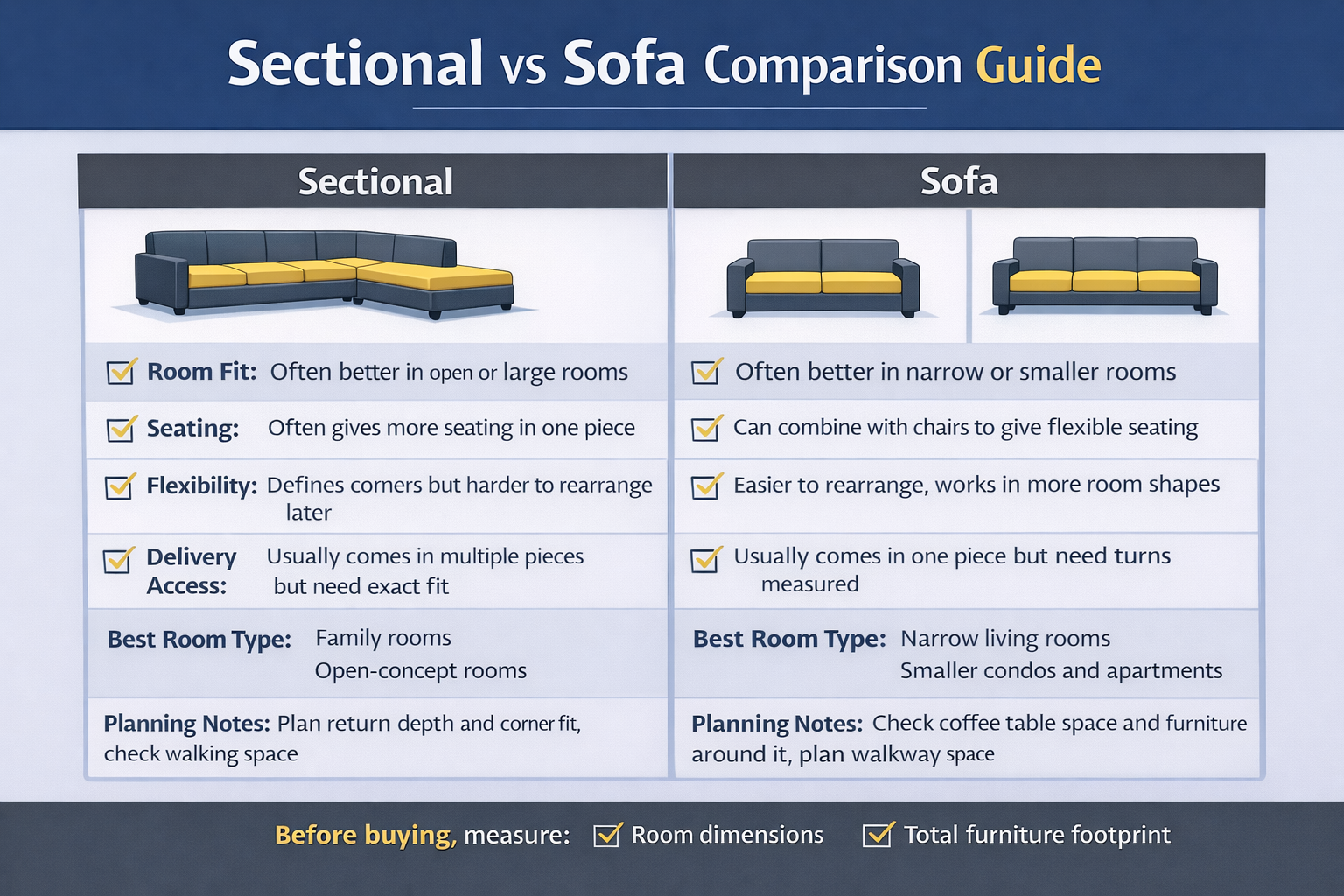
How do you choose between a sectional and a regular sofa?
A sectional may make sense if you want more corner seating, want to define an open room, or prefer one large seating piece instead of a sofa plus loveseat. A regular sofa may make more sense if the room is narrow, the layout changes often, or access is tight.
A sectional may suit:
-
family rooms
-
open-concept spaces
-
corners that need seating
-
homes where guests visit often
A regular sofa may suit:
-
narrower rooms
-
smaller condos
-
rooms with more doors or traffic paths
-
buyers who want more layout flexibility
At Furniture Spot & Mattress Outlet in Halifax, the better option usually depends on traffic flow and room layout, not just the number of seats.
What is the difference between left-hand and right-hand sectionals?
This refers to the side of the chaise or return when you are facing the sectional from the front.
This matters because the same sectional size can work well in one room and poorly in another depending on:
-
nearby walls
-
doorway position
-
TV placement
-
window access
-
traffic paths through the room
Always check the orientation before ordering. This is one of the easiest mistakes to miss.
How much space should you leave around a sectional?
A sectional should not use up the whole room footprint. You need enough clearance to move around it and use the rest of the room.
Before buying, think about:
-
walking space around the chaise
-
coffee table spacing
-
TV viewing distance
-
door swing
-
access to windows and vents
-
traffic flow through the room
A sectional that fits on paper can still feel oversized if it blocks natural movement through the space.
How do you measure a room for a sectional properly?
Use this checklist before you buy:
-
measure room width
-
measure room length
-
measure the wall where the sectional will sit
-
measure the return side depth
-
mark the sectional footprint on the floor with tape
-
check coffee table spacing
-
check doorway width
-
check hallway turns
-
check stair landings
-
check elevator space if needed
Before buying, measure your doorway, hallway turns, and stairs.
What sectional sizes work best for different rooms?
Condo or apartment living room
A compact sectional or shorter chaise layout is often easier to fit.
Open-concept main floor
A standard sectional can help define the seating area without needing multiple separate pieces.
Basement family room
A larger sectional may work if the room has enough depth and the delivery path is manageable.
Narrow living room
A sectional can still work, but usually only if the return side is short enough to leave useful walking space.
If your room is small, plan walking clearance on both sides.
What delivery issues do people forget with sectionals?
Sectionals often come in multiple pieces, which can help, but access still matters.
People often forget to check:
-
apartment elevators
-
tight stair turns
-
basement access
-
hallway width
-
door width
-
low ceilings in stairwells
A sectional may fit the room itself but still be difficult to get into the home if access is tight.
FAQ
What is the standard size of a sectional sofa?
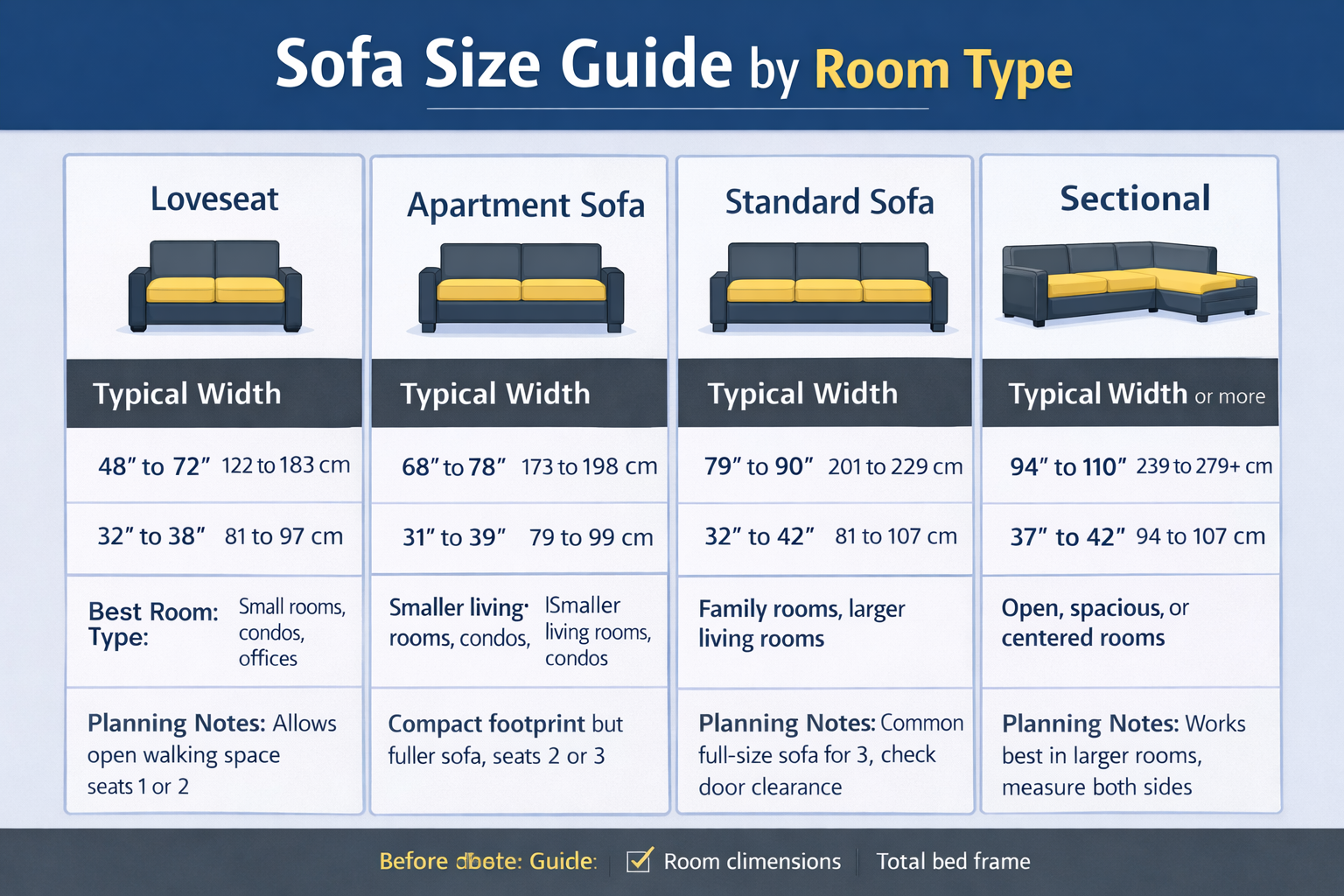
There is no single standard size, but many sectionals fall roughly between 94" and 145"+ wide depending on layout and seat count.
What size sectional works in a small room?
A compact sectional or smaller chaise sectional is often easier to place in a small room, especially if it leaves enough walking space.
Is a sectional better than a sofa?
Not always. A sectional may add more seating and use corners well, while a regular sofa may give more flexibility in tighter or narrower rooms.
How do I know if a sectional will fit?
Measure the room, mark the footprint on the floor, and check width, return depth, delivery access, and walking clearance.
What should I measure before buying a sectional?
Measure room width and length, wall space, chaise or return depth, doorways, hallways, stairs, and nearby furniture spacing.
Reality Check
A common mistake is measuring only the wall and ignoring the return side of the sectional. Another is choosing a model that looks right in a showroom or online photo without checking overall depth, arm width, and room traffic flow.
What can go wrong includes blocked walkways, a chaise that cuts into the room too much, delivery problems through doors or stairs, or a sectional that technically fits the room but makes it harder to use. This type of guide is best for shoppers planning a new living room layout, especially in condos, family rooms, or open-concept spaces. It may be less useful for buyers who already have exact model dimensions and a fully measured floor plan.