Sofa Sizes Guide
Sofa size matters because the wrong one can make a room feel crowded, block walkways, or create delivery problems before it even reaches the living room. This guide is for condo shoppers, renters, homeowners, and families trying to compare sofa sizes before buying. A common misunderstanding is that a sofa that fits the wall will fit the room, but walkway space, depth, and door access matter too.
What are the common sofa sizes?
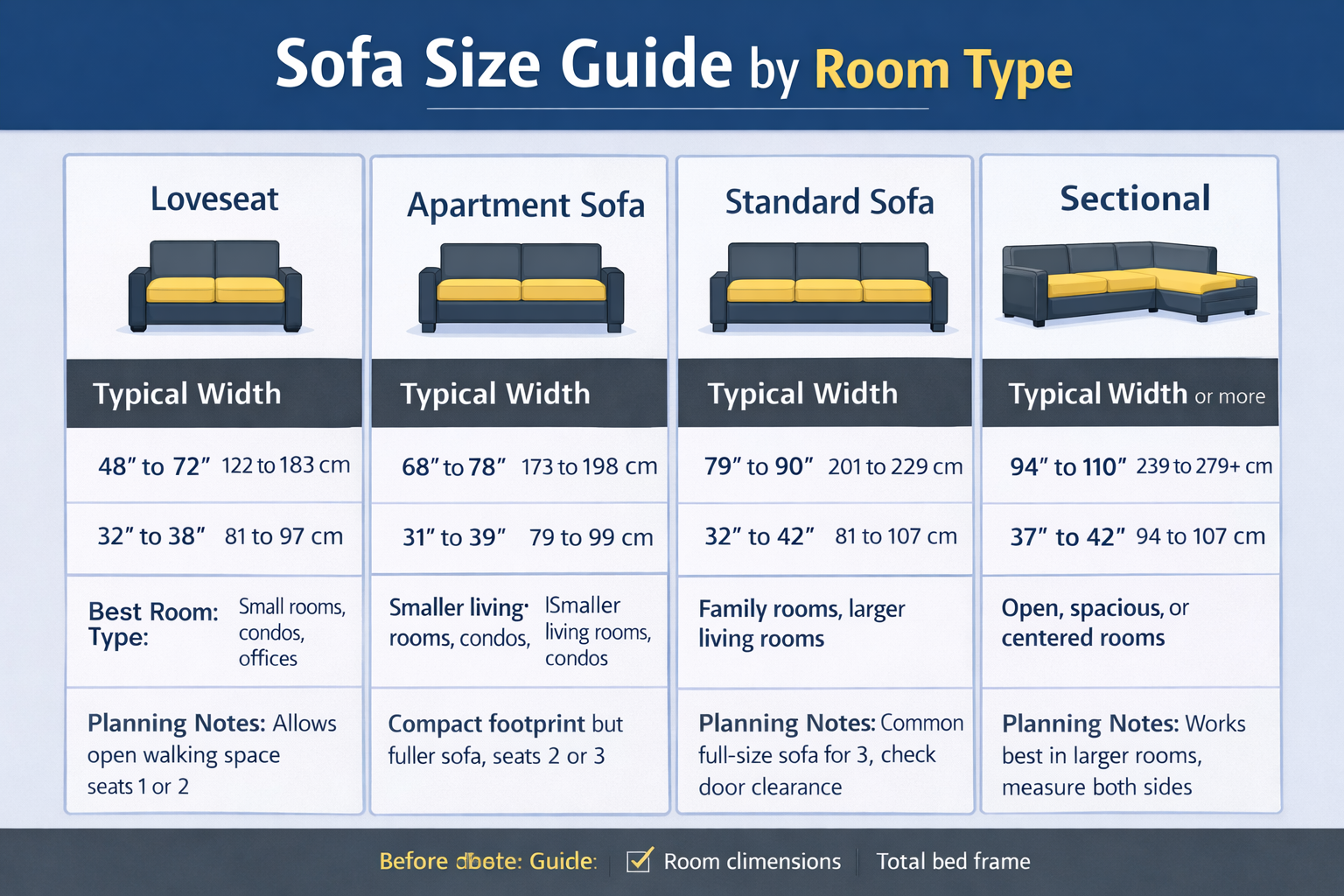
Most sofas fall into a few general size ranges. Exact measurements vary by brand and model, so these numbers are best used as planning ranges, not exact product specs.
| Sofa Type | Typical Width | Approx. cm |
|---|---|---|
| Apartment sofa | 68" to 78" | 173 to 198 cm |
| Standard 3-seat sofa | 79" to 90" | 201 to 229 cm |
| Large sofa | 91" to 100" | 231 to 254 cm |
| Loveseat | 48" to 72" | 122 to 183 cm |
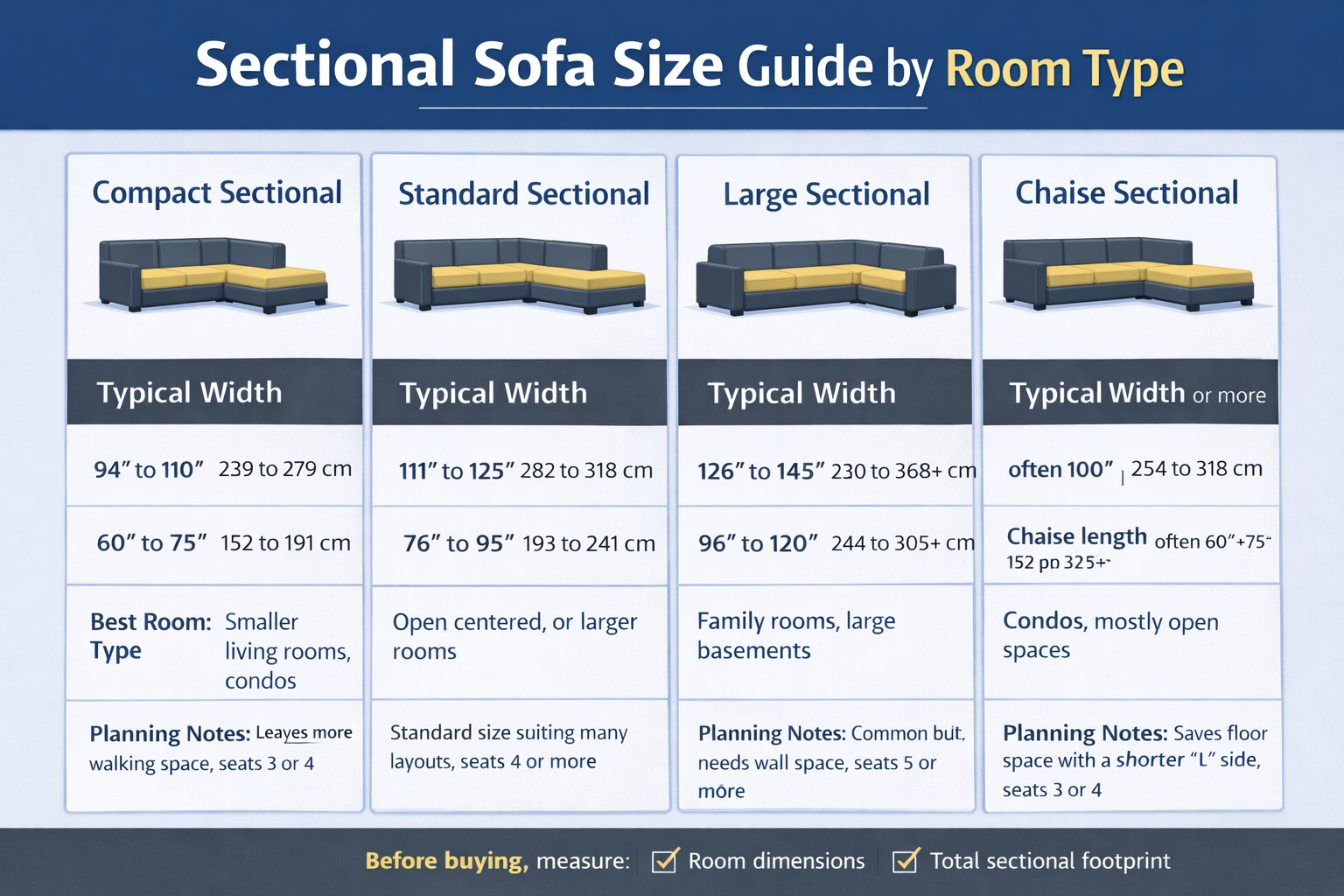
| Sectional, small | 94" to 110" overall | 239 to 279 cm |
| Sectional, large | 111" to 130"+ overall | 282 to 330+ cm |
Brands can vary slightly, so tolerances happen. A sofa listed at 84" wide in one collection may feel very different from another 84" sofa if the arms are thicker or the depth is deeper.
What other sofa measurements matter besides width?
Width is only one part of the picture. You should also check:
-
overall depth
-
overall height
-
seat depth
-
seat height
-
arm width
-
back height
-
chaise length, if applicable
Two sofas with the same width can feel very different in the room. A deeper sofa may take up more usable floor space, especially in condos, apartments, or narrower living rooms.
Before buying, measure your doorway, hallway turns, and stairs.
What size sofa works in a small living room?
For smaller rooms, apartment sofas, slimmer 3-seat sofas, loveseats, and compact sectionals are often easier to place. The better choice depends on the room shape, not just the room size.
A smaller living room may suit:
-
a loveseat for two-person seating
-
an apartment sofa with slimmer arms
-
a compact sectional if the room is wider than it is deep
-
a sofa with visible legs for a lighter visual look
If your room is small, plan walking clearance on both sides.
How much space should you leave around a sofa?
A sofa should not fill the room wall-to-wall without leaving enough movement space. In most rooms, you should think about:
-
walking space in front of the sofa
-
side clearance near walls
-
coffee table space
-
TV viewing distance
-
nearby door swing
-
traffic paths through the room
A sofa that fits physically may still feel too large if it cuts into how the room works day to day.
Is a loveseat better than a full sofa?
Sometimes. A loveseat can make sense for smaller rooms, offices, condos, and tighter layouts. A full sofa may make more sense for family use or rooms where three-seat seating is needed regularly.
A loveseat may suit:
-
one or two people
-
smaller condos
-
guest spaces
-
bedrooms or offices
A full sofa may suit:
-
family rooms
-
shared living rooms
-
homes where guests visit often
-
shoppers who want more stretch-out space
At Furniture Spot & Mattress Outlet in Halifax, this usually comes down to room size, daily use, and whether the room needs more open floor space or more seating.
What size sectional should you choose?
Sectionals need more planning because they affect both width and room layout. A small sectional may work well in a condo or open-concept room, while a larger sectional may suit a family room with more wall and floor space.
Before choosing a sectional, check:
-
overall width
-
overall depth
-
chaise length
-
left-hand or right-hand orientation
-
walking space around the outer edge
-
where the sectional ends near windows, doors, or vents
If your room is small, plan walking clearance on both sides.
How do you measure for a sofa properly?
Use this checklist before you buy:
-
measure the wall length
-
measure the room width and length
-
measure doorways
-
measure hallway turns
-
measure stairs
-
measure elevator space if needed
-
mark the sofa footprint on the floor with tape
-
check coffee table and TV unit spacing
-
check nearby doors, windows, and vents
Before buying, measure your doorway, hallway turns, and stairs.
What sofa size works best for different rooms?
Condo or apartment living room
A loveseat, apartment sofa, or compact sectional is often easier to fit.
Narrow living room
A slimmer sofa with less depth may work better than a bulky deep-seat model.
Family room
A standard 3-seat sofa or larger sectional may make more sense if the room has enough open space.
Office or den
A loveseat or compact sofa may give enough seating without taking over the room.
The best size is usually the one that supports how the room is used, not the one with the biggest seating count.
What delivery and access issues do people forget?
This is one of the biggest mistakes buyers make. They measure the room but forget the path into the home.
Check:
-
exterior doors
-
apartment hallway turns
-
stair landings
-
elevator depth and width
-
interior doors
-
ceiling height in tight stair turns
A sofa that looks fine on paper can still be difficult to deliver if the access path is tight.
FAQ
What is the standard sofa size?
A standard 3-seat sofa is often around 79" to 90" wide, but sizes vary by brand and design.
What size sofa is best for a small room?
A loveseat, apartment sofa, or compact sectional is often easier to place in a small room, depending on depth and layout.
Is a loveseat enough for a living room?
It can be, especially in smaller condos, offices, or two-person spaces. Larger households may need a full sofa or extra seating.
How do I know if a sofa will fit my room?
Measure the room, mark the footprint on the floor, and check walking space, door swing, and furniture around it.
What should I measure before buying a sofa?
Measure the room, wall length, sofa path into the home, doors, hallways, stairs, and nearby furniture spacing.
Reality Check
A common mistake is focusing only on width and ignoring sofa depth, arm thickness, and delivery access. Another is choosing a larger sofa because it looks good in a showroom or product photo, even though the real room needs more open walkway space.
What can go wrong includes blocked traffic flow, a room that feels crowded, delivery problems through stairs or doors, or a sofa that technically fits the wall but not the layout. This type of guide is most useful for shoppers planning a new living room, condo layout, or sectional purchase. It may be less useful for buyers who already know the exact model dimensions and have measured the room carefully.