Area Rug Sizing Under Sofas and Dining Tables
The most common rug mistake is buying one size too small. It happens because rugs are expensive, the jump from 5x8 to 8x10 costs real money, and a 5x8 looks generous when it is rolled up in a store. Unrolled in a living room, it becomes a bath mat with a sofa parked beside it.
A rug that is too small makes a room read smaller, which is the opposite of what people buy it for. The fix is arithmetic, not taste.
Living rooms: pick one of three arrangements
All legs on. Every piece of furniture sits entirely on the rug, with a border of bare floor showing around the outside. This is the most generous arrangement and needs the largest rug, usually 9x12 or bigger in a room of any size. It anchors the seating group as one object.
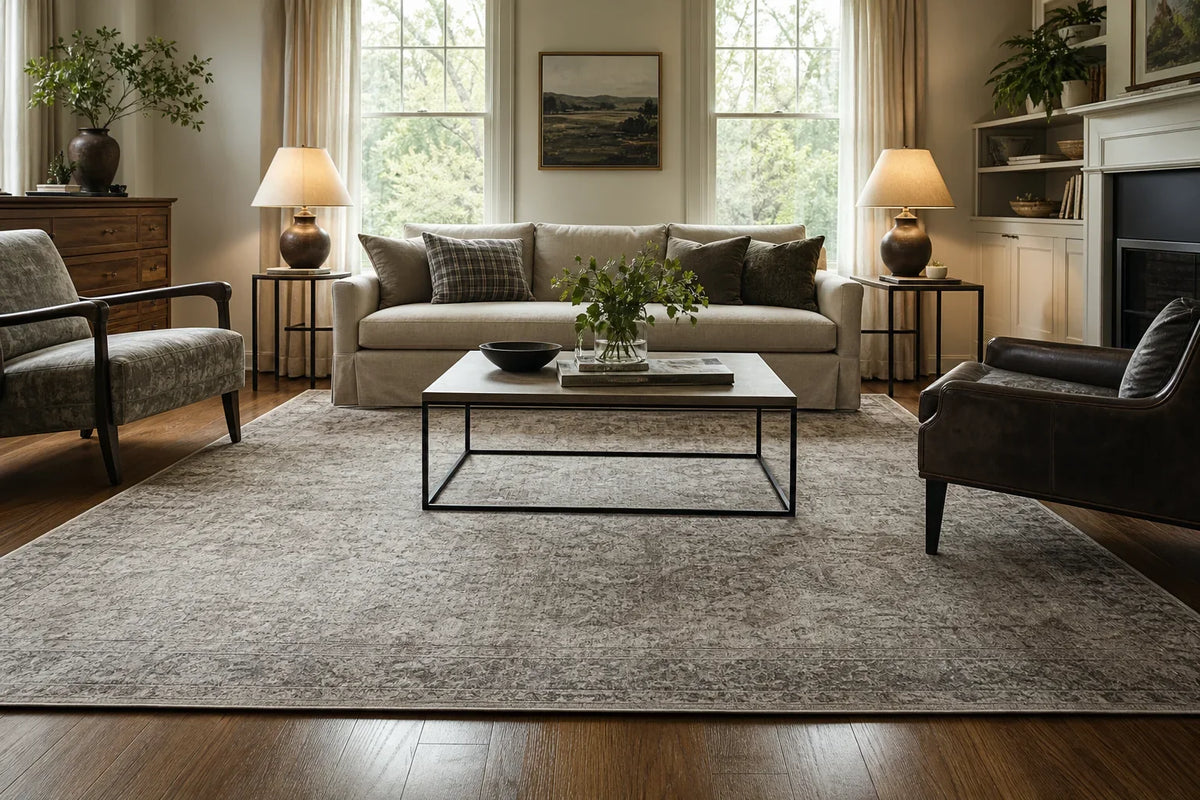
Front legs on. The front legs of the sofa and chairs rest on the rug, the back legs sit on the floor. This is the arrangement that works in most Halifax living rooms, because it gives you the visual connection without demanding a rug the size of the room. An 8x10 covers a standard three-seat sofa and two chairs this way.
Floating. Nothing touches the rug; it sits in the middle of the seating group as a surface for the coffee table. This only works when the seating is already tight and the room is small, and it is the arrangement people end up in by accident when the rug is undersized.
Whichever you choose, the rug should extend at least six to eight inches past the sides of the sofa. Ending flush with the sofa arms looks like a measuring error, because it is one.
Dining rooms: the number is 24 inches
Under a dining table the rug has one job, which is to stay under the chair legs when the chair is pulled out. Push a dining chair back to sit down and the back legs travel roughly 20 inches. If the rug ends before they do, the chair catches the edge every single time and eventually tears it.
So the rug must extend at least 24 inches beyond the table edge on all four sides, and 30 is better if the chairs are heavy or have wide back legs. For a standard six-seat rectangular table around 72 inches long, that means a 9x12 rug, not an 8x10. Measure your table and add four feet to each dimension.
Round tables follow the same logic. A 48-inch round table wants a rug at least 8 feet across.
Two practical notes
Pile height matters more in a dining room than a living room. A thick pile makes chairs difficult to slide and traps crumbs in the fibres. Flat weave or low pile is the sensible choice under a table.
Use a rug pad. It stops slipping, adds a small amount of cushion, and, more usefully in older homes with original hardwood, protects the floor finish from grit ground in underfoot.
Our rug selection is small and rotates, so check what is in before you settle on a size
If you are unsure between two sizes, tape the larger one out on your floor first. It is almost always the right answer.
area rugs. Related: coffee table height should match your sofa and chair leg wear and floor interaction.