Wall-Hugger Recliners and the Space Behind Them
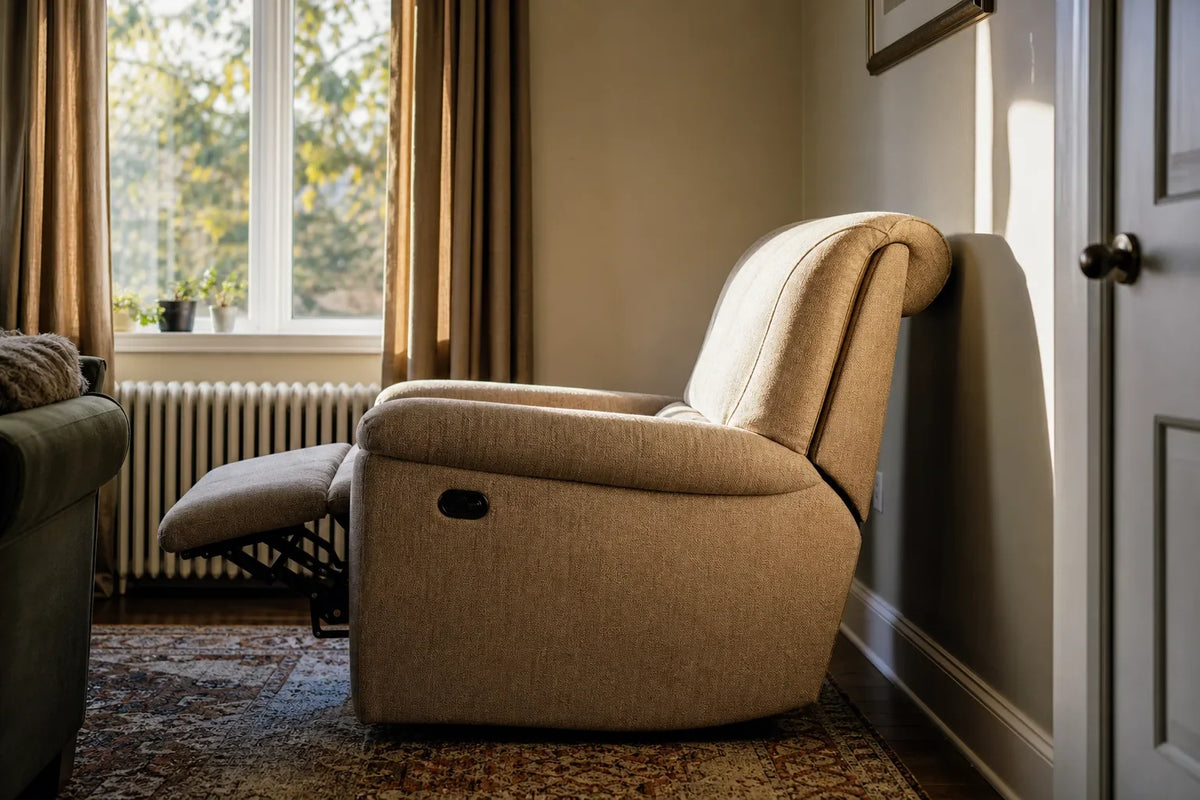
A standard recliner needs somewhere between ten and fifteen inches of clear wall behind it to open fully. In a Halifax living room measuring twelve feet across, with a radiator under the window and a door swing on one wall, that fifteen inches is often the difference between a chair that works and a chair that reclines halfway and stops against the baseboard.
A wall-hugger solves this by moving the seat forward on a track as the back goes down, instead of pivoting the back into the space behind it. Clearance requirement drops to roughly four to six inches depending on the model.
Measuring it properly
Do this before you shop, with a tape measure and a piece of chalk or painter's tape on the floor.
Mark the wall line. Measure straight out and mark the depth of the chair you are considering, which is the closed depth from the manufacturer's specification, not the depth of your current chair. Then measure out again from that line to mark the footrest extension when fully open. That total is what the chair occupies in your room while somebody is using it, and it is usually eight to twelve inches more than people picture.
Now check what that line crosses. A coffee table, a traffic path to the kitchen, a heat register that needs airflow. On a wall-hugger the chair also slides forward as it opens, so the front line moves further out than the closed measurement suggests. Account for both movements.
Baseboards and trim matter here in a way they do not in newer construction. A deep Victorian baseboard, or a radiator pipe running up the corner, eats two inches before the chair has moved at all. Measure from the face of the trim, not the wall.
The trade-off you are accepting
Wall-huggers use a more complex mechanism with more moving parts in the track. That is more to go wrong over a decade of daily use, and the ride is often less smooth than a conventional rocker recliner. They also cannot rock, because the base is fixed. If rocking is what you wanted the chair for, this is the wrong category.
The reclined angle is frequently shallower too. A wall-hugger that stops at a comfortable television angle may not lie back far enough for a nap. Try it in the position you actually plan to use it in, for longer than thirty seconds.
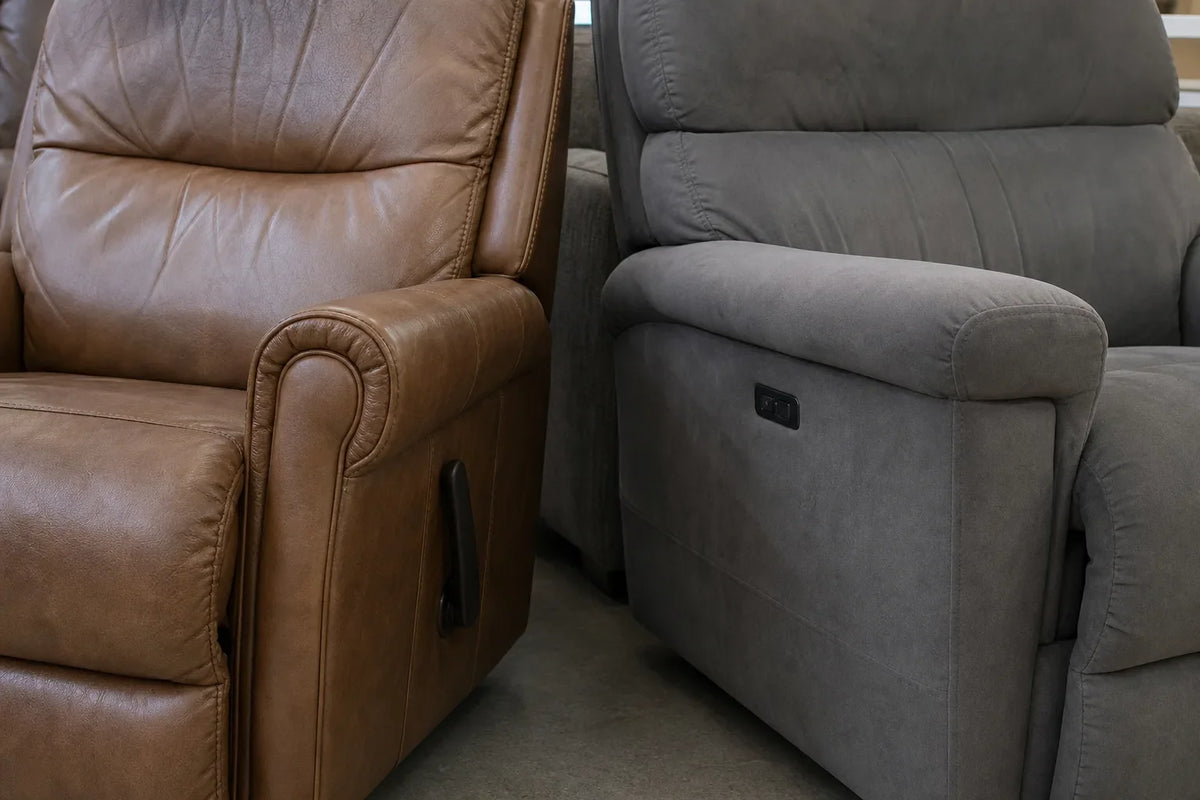
Ask which models on our floor are wall-hugger designs; it is not always obvious from the photograph
The cheaper alternative nobody mentions
If you are two inches short on clearance, you do not automatically need a wall-hugger. Pulling a conventional recliner forward off the wall by four inches and putting a narrow console or a plant behind it looks intentional and costs nothing. In a room where the chair sits in a corner rather than flat against a wall, this often solves the problem outright.
Bring your wall measurement and we will tell you which models on the floor will actually open in that space.
recliners and accent chairs. Related: how to measure for a sectional and large-looking sofas in small living spaces.