

Round Coffee Tables for Sectionals: Choose the Right Diameter
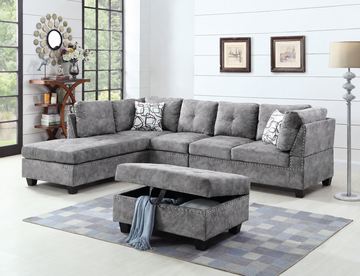
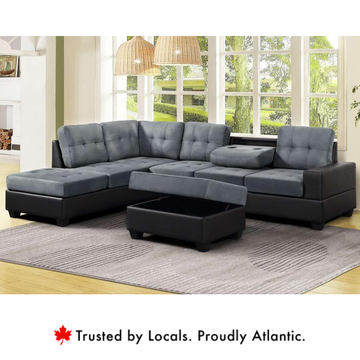
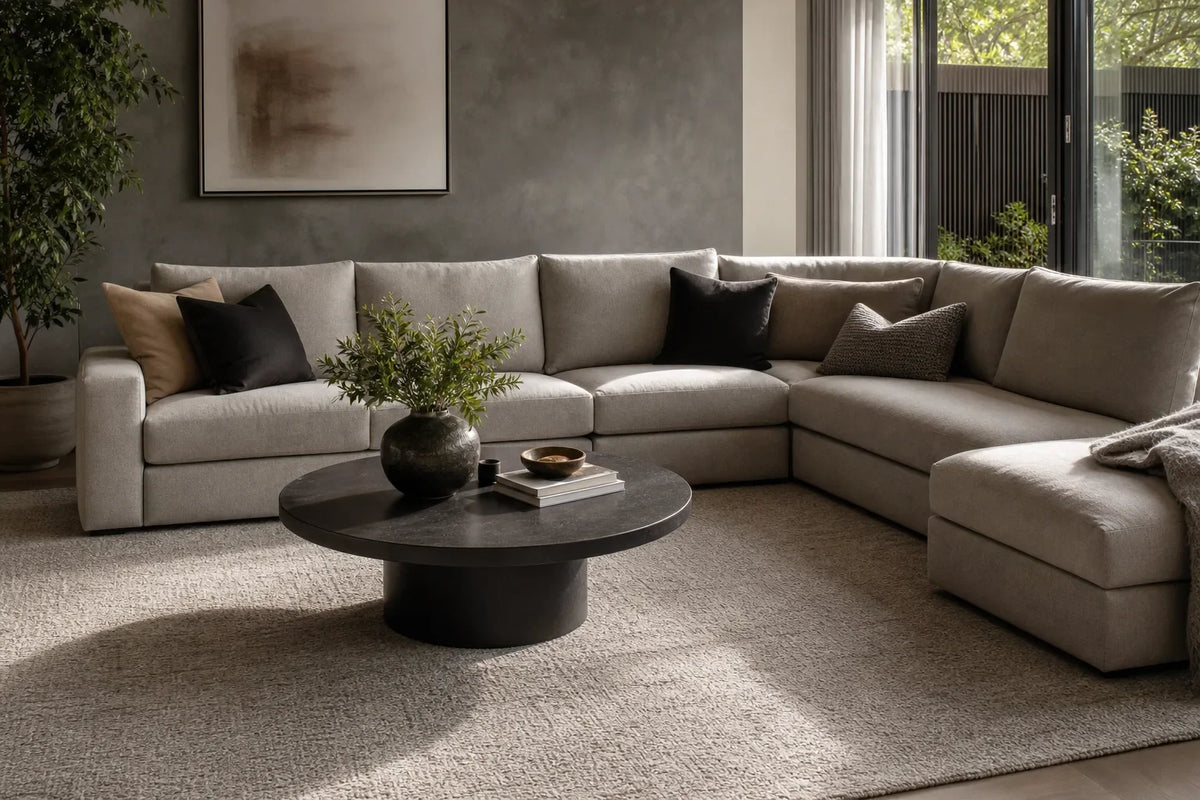
Choose a round coffee table by the open floor area inside your sectional, then check reach from every regular seat. The sectional's overall width can be misleading because arms, corners and a chaise do not all face the table equally. A circle that fits on paper can still leave someone stretching for a drink or interrupt a walking route.
Our existing coffee-table height guide covers height and general spacing. Here, the decision is diameter: how large a circle your particular seating arrangement can use comfortably.
Draw the opening inside the L-shape
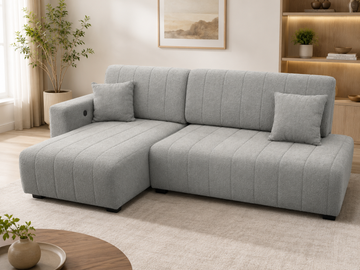
Sketch the sectional from above. Mark the actual front edges of the seats, including the chaise, rather than using only the manufacturer's outer width and depth. Then mark the route people use to enter and leave the seating area.
If you have not settled the sofa layout, use our sectional measuring guide first. Changing the chaise side can change where the useful table position is.
Ethan Allen's coffee-table guidance distinguishes a sectional's inner seating run from its full outside width. That is a better starting reference than treating every large sectional as a reason to buy a large table.
Calculate an initial diameter, then test it
For a simple rectangular opening, subtract your chosen gaps on opposite sides from the available dimension. Do the calculation in both directions. The smaller result is the initial upper limit for a circle in that position.
Worked example: why one direction decides the fit
Suppose the usable opening is 150 cm wide and 180 cm deep. For this example, you choose a 40 cm gap on each opposing side:
| Direction | Calculation | Diameter left |
|---|---|---|
| Width | 150 − 40 − 40 | 70 cm |
| Depth | 180 − 40 − 40 | 100 cm |
A 100 cm circle meets the depth calculation but fails the width calculation. A 70 cm circle fits those assumed boundaries. These figures demonstrate the method; 40 cm is an example gap, not a universal access requirement or a building-code clearance.
An irregular opening needs more than this calculation. Cut a paper circle to scale, or lay out the diameter with removable floor markers that will not damage your flooring. Remove any loose material before walking through the test area.
Check reach from the seats you actually use
Sit in your normal place and position. Imagine setting down a mug without standing or shifting to the cushion edge. Repeat from the chaise, corner and opposite end.
Moving the table closer to one person can make it less useful for someone else. That is not always a reason to increase the diameter: a larger circle may reduce the route into the seating area. A separate side table can solve a reach problem without filling the central opening.
For a household that rarely uses the corner seat, prioritising the two everyday positions may be sensible. For frequent gatherings, make sure occasional guests also have a usable place for drinks. Record whose needs the layout serves rather than judging it solely by symmetry.
Include the base and the route around it
The tabletop outline is only part of the footprint. A flared base, projecting feet or a low shelf may occupy the space where your feet pass. Inspect photographs from several angles and request the base dimensions if they are missing.
Walk the real route into the sectional while another person remains seated. Then try it with a bag, laundry basket or other object you commonly carry. This is a household fit check, not proof of accessibility compliance. If someone uses a mobility aid, test their actual movement requirements rather than relying on a generic furniture-spacing number.
Round edges remove projecting tabletop corners, but do not make a table automatically safe for children. Stability, material, condition and the way the room is used still matter.
When an oval or two smaller tables work better
| Problem with the circle | Alternative to test |
|---|---|
| Plenty of length but limited width | A narrower oval tabletop |
| Two frequently used seats far apart | Separate reachable tables |
| An irregular space around a chaise | Two movable surfaces with independent positions |
| A heavy base obstructs feet | A different base within the same tabletop size |
Compare alternatives with the same floor-template method. A different shape only helps if the usable surface lands where people need it.
Make the final decision with three checks
Before ordering, confirm the table fits the opening, serves the regular seats and preserves the route people use. Check height against your seat cushions separately. Keep a photograph of your template and the measured diameter with your shopping notes.
Browse FurnitureSpot's coffee tables by their actual dimensions and base design. Shape is a useful filter; the room test makes the purchase decision.